

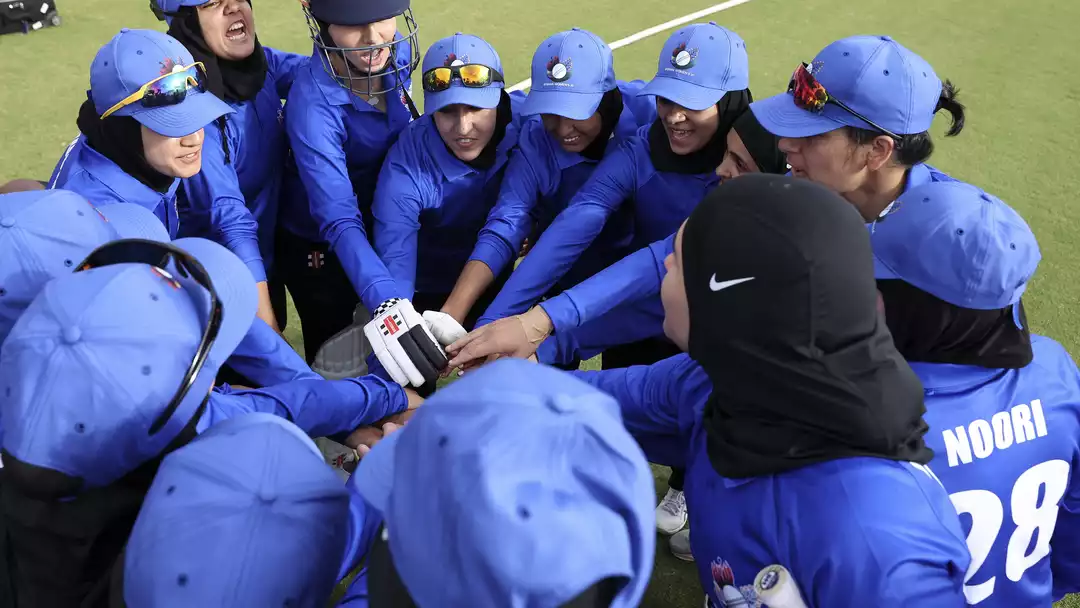
The England and Wales Cricket Board (ECB) has announced a landmark initiative that goes far beyond cricket. Beginning on June 22, England will host the Afghanistan Refugee Women’s Team for a special tour aimed at providing competitive opportunities, training exposure, and global recognition to players whose cricketing dreams were disrupted by political upheaval in their homeland.
The tour, organised in collaboration with the Marylebone Cricket Club and the MCC Foundation, represents one of the strongest public gestures of support for displaced Afghan women cricketers since the Taliban returned to power in Afghanistan in August 2021.
More than just a sporting event, the tour carries deep emotional and symbolic importance. For the players involved, it is another step in reclaiming identities and ambitions that were nearly erased after women were effectively banned from sport and public life under Taliban rule.
Cricket Beyond Boundaries
The Afghanistan Refugee Women’s Team consists of former Afghanistan women cricketers who fled the country following the Taliban takeover nearly five years ago. Many of these players eventually resettled in Australia, where they have continued training and playing cricket despite the enormous personal and professional challenges they faced.
The upcoming tour in England will include T20 fixtures, high-performance training sessions, and opportunities for the players to reconnect with the global cricketing community. One of the major highlights of the tour will see the squad attend the final of the ICC Women’s T20 World Cup 2026 at Lord’s Cricket Ground on July 5.
The iconic venue, often referred to as the “Home of Cricket,” will now become part of a story that reflects resilience, survival, and hope.
ALSO READ-BCCI Unveils Massive 2026-27 Domestic Cricket Calendar
A Journey Forced by Circumstance
The story of Afghanistan’s displaced women cricketers is one of extraordinary courage.
Before 2021, Afghanistan’s women’s cricket programme had slowly begun developing despite cultural and structural obstacles. A number of young female players were training with aspirations of representing their country internationally.
However, after the Taliban regained control of Afghanistan in August 2021, women were systematically removed from education, public spaces, employment, and sport. Female athletes faced immense uncertainty and fear, with many forced into hiding.
For these cricketers, continuing their sporting careers inside Afghanistan became impossible.
Several players managed to evacuate and relocate abroad, largely through the efforts of humanitarian organisations, sports advocates, and former cricketers who worked tirelessly to help them secure safe passage.
Eventually, many settled in Australia, where cricket once again became part of rebuilding their lives.
The Role of Mel Jones and It’s Game On
One of the key figures behind the players’ relocation and continued support has been Mel Jones.
Jones, along with Emma Staples and Dr Catherine Orway, co-founded the global sports consultancy It’s Game On, which has played a major role in advocating for displaced Afghan women athletes.
The organisation has worked closely with international sporting bodies to create opportunities centred around inclusion, equality, and athlete welfare.
Jones was instrumental in helping many of the Afghan cricketers relocate to Australia safely after the Taliban takeover. Since then, she has continued campaigning for sustained support rather than symbolic gestures.
Speaking about the upcoming England tour, Jones stressed that while the programme is an important milestone, much more remains to be done.
According to her, these players deserve to be recognised fully within the global cricket community and should receive consistent opportunities to compete and grow rather than occasional exhibitions.
Her comments reflect a wider debate within international cricket regarding Afghanistan women’s cricket and the responsibility of global governing bodies.
ECB Emphasises Inclusion and Opportunity
The ECB has made it clear that the tour is not simply about organising matches. It is also about sending a message regarding cricket’s values.
Clare Connor described the players’ journey as one of remarkable resilience, acknowledging the difficult circumstances under which they have continued pursuing cricket.
Connor stated that cricket has a responsibility to stand for inclusion and opportunity, adding that the ECB was proud to host the tour and support the players’ continued connection to the game.
Those remarks underline the increasingly important social role sports organisations are expected to play in modern global issues. In recent years, sporting bodies have faced growing pressure to take clearer positions on human rights, equality, and inclusivity.
By supporting the Afghanistan Refugee Women’s Team, the ECB is positioning itself as one of the leading cricket boards willing to publicly support displaced female athletes.
Earlier Appearance in Australia Drew Global Attention
This will not be the first time the Afghanistan Refugee Women’s Team steps onto an international stage.
In January 2025, the side played against a “Cricket Without Borders XI” at the Junction Oval in Melbourne ahead of the Women’s Ashes Test at the MCG. The match, streamed by Cricket Australia, attracted widespread attention from cricket fans worldwide.
That fixture was significant because it gave the players a platform to compete publicly once again after years of uncertainty.
It also sparked broader conversations about the future of Afghanistan women’s cricket and whether international cricket authorities should do more to support displaced players.