

The Board of Control for Cricket (BCCI) in India has officially announced its packed domestic calendar for the 2026-27 season, setting the stage for another marathon year of Indian cricket across men’s, women’s, and age-group competitions.
With a staggering 1,788 matches scheduled throughout the season, the new domestic structure underlines the BCCI’s continued commitment to strengthening the cricketing ecosystem from grassroots to elite level. From the prestigious Ranji Trophy and Duleep Trophy to women’s tournaments and youth cricket, the calendar promises non-stop action across the country.
The season will begin in August and continue deep into March, featuring major structural decisions, venue expansions, and the return of some traditional tournaments that had disappeared from the domestic circuit.
Duleep Trophy to Open the Season
As has become customary in recent years, the 2026-27 domestic season will begin with the Duleep Trophy.
The tournament is scheduled to run from August 23 to September 10 at the BCCI’s Centre of Excellence in Bengaluru. The tournament often serves as the curtain-raiser for India’s domestic red-ball season and provides selectors an early look at emerging talent.
Over the years, the Duleep Trophy has acted as a stepping stone for several future Indian internationals, and this season is expected to be no different.
Srinagar to Host Irani Cup
In a significant move, Srinagar will host the prestigious Irani Cup from October 1 to 5.
The decision is notable not just from a cricketing perspective but also for the continued expansion of top-level domestic cricket into newer regions. Hosting a marquee red-ball fixture in Srinagar reflects the growing importance of Jammu and Kashmir in the Indian cricket landscape.
The Irani Cup traditionally features the Ranji Trophy champions against the Rest of India side and is regarded as one of the toughest contests in India’s domestic calendar.
Ranji Trophy Split Into Two Phases Again
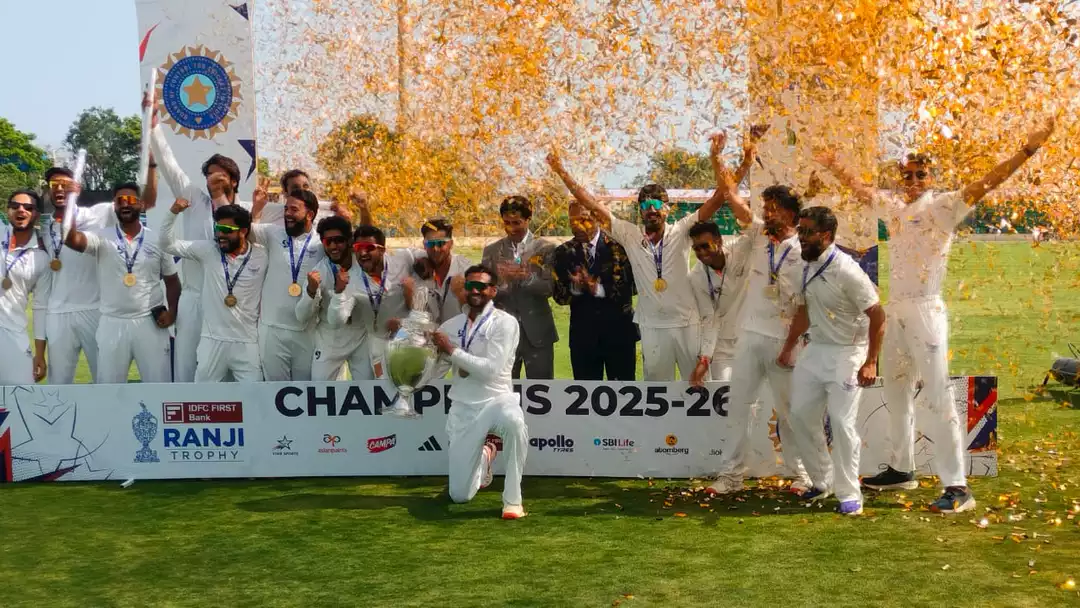
India’s premier first-class competition, the Ranji Trophy, will once again be played in two phases.
The first phase of the Elite division begins on October 11 and continues until November 5. The tournament will then resume with the second phase from January 17 to February 4, while the knockout matches are scheduled between February 9 and March 3.
The Plate division will conclude earlier, with the second phase ending on January 20 and the final taking place from January 24 to 28.
The split-window scheduling has become increasingly important due to weather management, player workload, and India’s crowded international calendar.
Ranji Trophy Groups Announced
The BCCI also confirmed the group divisions for the upcoming Ranji Trophy season.
Elite Group A
- Jammu & Kashmir
- Madhya Pradesh
- Vidarbha
- Baroda
- Uttar Pradesh
- Pondicherry
- Goa
- Bihar
Elite Group B
- Karnataka
- Andhra Pradesh
- Saurashtra
- Chhattisgarh
- Hyderabad
- Tripura
- Punjab
- Assam
Elite Group C
- Bengal
- Jharkhand
- Maharashtra
- Services
- Gujarat
- Kerala
- Delhi
- Odisha
Elite Group D
- Uttarakhand
- Haryana
- Mumbai
- Railways
- Rajasthan
- Tamil Nadu
- Himachal Pradesh
- Chandigarh
Plate Group
- Nagaland
- Manipur
- Meghalaya
- Sikkim
- Mizoram
- Arunachal Pradesh
The grouping has already generated discussion among fans and analysts, especially with powerhouse teams like Mumbai, Karnataka, Saurashtra, Bengal, and Vidarbha spread across different groups.
Col. C.K. Nayudu Trophy Winners vs Rest of India Returns
One of the most interesting developments in the new calendar is the reinstatement of the Col. C.K. Nayudu Trophy Winners vs Rest of India fixture.
The match will be played from October 1 to 4 and aims to provide additional exposure to emerging Under-23 cricketers. The BCCI stated that the return of the contest is intended to create a stronger competitive platform for young domestic talent transitioning toward senior cricket.
This move has been widely welcomed because the U23 level is often viewed as a critical stage in player development.
ALSO READ-India Bet on Youth for Afghanistan Test
Syed Mushtaq Ali Trophy to Span Multiple Cities
The Syed Mushtaq Ali Trophy, India’s premier domestic T20 competition, will begin on November 14.
League-stage matches in the Elite division will be hosted across:
- Mumbai
- Visakhapatnam
- Kolkata
- Mohali
The knockout stage will be played in Nagpur from November 30 to December 6.
Meanwhile, all Plate division matches, including the final, will be held in Dimapur.
The tournament remains one of the biggest scouting grounds for IPL franchises and national selectors due to the increasing importance of T20 cricket.
Vijay Hazare Trophy to Follow in December
The domestic one-day season will be anchored by the Vijay Hazare Trophy.
The Elite league stage will run from December 14 to 29 across:
- Ahmedabad
- Bengaluru
- Ranchi
- Rajkot
The knockout stage is scheduled in Visakhapatnam from January 2 to 8.
The Plate division fixtures, including the final, will be hosted in Indore.
The Vijay Hazare Trophy has historically produced several India internationals and continues to play a major role in identifying white-ball talent.
Bengaluru and Mysuru to Host Cooch Behar Knockouts
In another important development, the knockout matches of the Cooch Behar Trophy Elite division will be played in:
- Bengaluru
- Mysuru
The fixtures are scheduled from January 3 to 30.
The Cooch Behar Trophy remains India’s premier Under-19 red-ball tournament and has historically served as a breeding ground for future international cricketers.
Major Window for Women’s Domestic Cricket
The BCCI calendar also allocates substantial space for women’s domestic cricket, reflecting the board’s continued push toward strengthening the women’s game.
The Senior Women’s T20 Trophy Elite competition will run from October 26 to November 6 across:
- Lucknow
- Pune
- Delhi
- Mohali
The knockout matches will be held in Ahmedabad from November 14 to 20.
Similarly, the Senior Women’s One Day Trophy Elite tournament will be played between December 19 and 31 in:
- Cuttack
- Jaipur
- Vadodara
- Raipur
The knockouts will take place in Chennai from January 4 to 10.
The continued expansion of women’s tournaments highlights the rapid growth of women’s cricket in India following the rise in popularity of the Women’s Premier League and increased international success.
Big Shift in U23 Cricket Structure
One of the boldest decisions announced by the BCCI is the conversion of the Men’s U23 State A Trophy and the Vizzy Trophy from one-day tournaments into T20 competitions.
The change reflects the growing importance of the T20 format in player development and talent identification. Young cricketers are now increasingly expected to adapt quickly to shorter formats, especially with IPL scouting becoming more aggressive at junior levels.
The move is expected to help emerging players gain better exposure to modern white-ball demands.
A Season Built for Depth and Development
The scale of the 2026-27 domestic season once again reinforces why India possesses one of the deepest cricketing structures in the world.
With nearly 1,800 matches scheduled across formats, genders, and age groups, the domestic ecosystem continues to serve as the backbone of Indian cricket’s success. From identifying future international stars to providing competitive exposure in every corner of the country, the calendar reflects the BCCI’s long-term investment in talent development.
For players across India, the upcoming season offers opportunity, visibility, and a pathway to the highest level.
And for fans, it promises nearly eight months of uninterrupted domestic cricket action.