

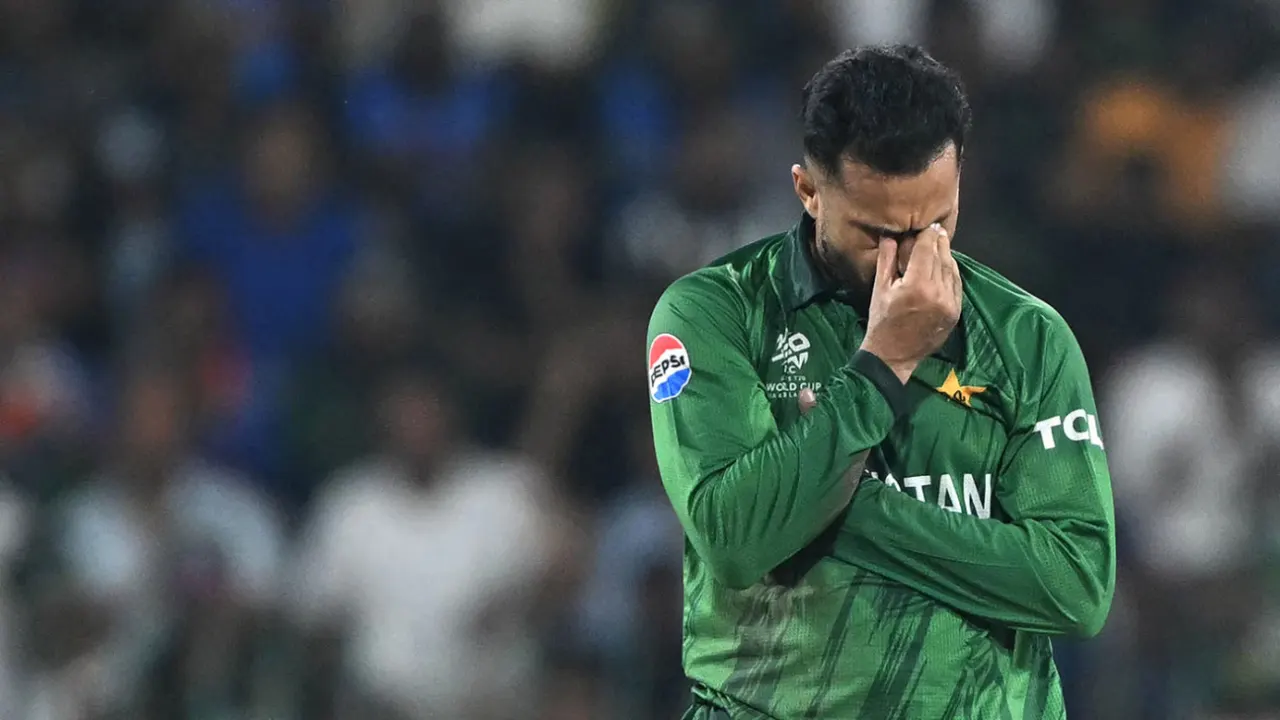
Pakistan all-rounder Mohammad Nawaz has been sanctioned by the International Cricket Council (ICC) for breaching the ICC Anti-Doping Code after testing positive for a prohibited recreational substance. The 32-year-old has received a three-month suspension, although the ban has been backdated and is expected to be significantly reduced after he completes a mandatory treatment programme.
The ICC confirmed that Nawaz’s suspension began on May 1, 2026, when he voluntarily accepted a provisional suspension while the investigation was underway.
Positive Test During T20 World Cup
According to the ICC, Nawaz tested positive for Carboxy-THC, a Substance of Abuse under the ICC Anti-Doping Code, following Pakistan’s T20 World Cup 2026 match against the Netherlands in Colombo, Sri Lanka, on February 7.
The governing body stated that the prohibited substance was detected during routine anti-doping testing conducted after the match.
Following an investigation, Nawaz admitted the violation and cooperated fully with the ICC’s anti-doping process.
Substance Not Linked to Performance Enhancement
The ICC clarified that Nawaz demonstrated the substance had been consumed outside competition and was unrelated to improving sporting performance.
As a result, the case was treated under the special provisions of the ICC Anti-Doping Code that apply to recreational substances rather than performance-enhancing drugs.
Because of his admission and cooperation, Nawaz was offered a reduced sanction, provided he successfully completes a substance abuse treatment programme approved by the ICC.
Suspension Already Served
Although Nawaz received a three-month suspension, the punishment has effectively already been served.
The ban was backdated to May 1, meaning the Pakistan all-rounder has already completed around two and a half months of his suspension.
The ICC confirmed that his provisional suspension has now been lifted.
Once Nawaz completes the required treatment programme to the satisfaction of the ICC, the remaining period of ineligibility will be reduced, leaving him with an effective one-month suspension.
This means he will not be required to serve any additional ban if all conditions are fulfilled.
Match Results Disqualified
Under the ICC Anti-Doping Code, Nawaz’s individual records from Pakistan’s T20 World Cup match against the Netherlands have been officially disqualified.
In addition, all of his personal results in matches played between February 7 and May 1, 2026, have also been annulled.
The ruling affects only Nawaz’s individual statistics and records rather than Pakistan’s overall team results.
ALSO READ-ICC Unveils New Format for 2027 ODI World Cup
Surrey Move Fell Through
The anti-doping investigation had already impacted Nawaz’s professional career before the official sanction was announced.
Earlier this year, reports emerged that Nawaz was under investigation following a positive test for recreational drug use during the T20 World Cup.
The ongoing case resulted in the cancellation of his planned stint with Surrey in England’s T20 Blast.
Nawaz had been scheduled to represent Surrey between May 26 and July 18, but the three-month suspension made him unavailable for the competition.
Busy Schedule Before Suspension
Before his provisional suspension began, Nawaz remained active in both international and franchise cricket.
He featured in all seven of Pakistan’s matches during the 2026 T20 World Cup and later represented Multan Sultans throughout the Pakistan Super League season.
His last competitive appearance came on April 29 while playing in the PSL.
Pakistan did not have any white-ball international fixtures during the suspension period, limiting the immediate impact on the national team.
Although Nawaz has represented Pakistan in six Test matches, his last appearance in the longest format came nearly four years ago. In recent years, he has established himself primarily as a white-ball specialist.
PCB Yet to Comment
The Pakistan Cricket Board (PCB) has not issued an official statement regarding the ICC’s decision.
When approached for comment, the board declined to respond publicly to the matter.
With his provisional suspension lifted and the treatment programme underway, Nawaz is expected to become eligible for selection once the ICC formally confirms the completion of all required conditions.
The case highlights the ICC’s distinction between recreational substances and performance-enhancing drugs, allowing reduced sanctions where players admit responsibility, cooperate with investigations, and complete rehabilitation programmes.
For Nawaz, the focus will now shift to returning to competitive cricket and rebuilding his place in Pakistan’s white-ball setup after an unfortunate off-field setback.