

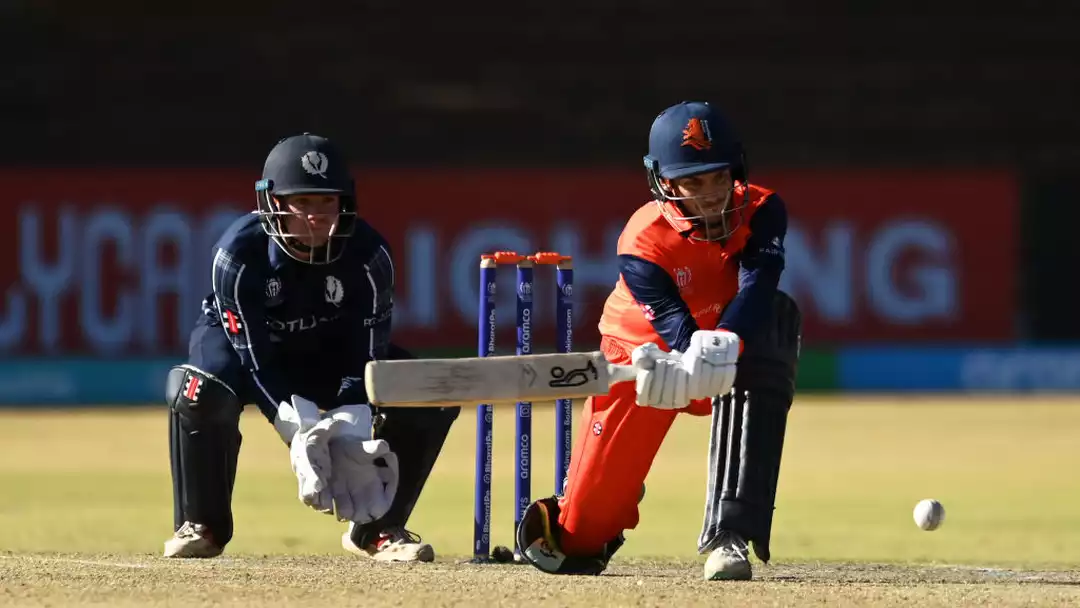
Cricket Scotland and the Royal Dutch Cricket Association have criticized the ICC’s revamped ODI World Cup format, warning that the changes could hurt Associate nations and undermine the growth of global cricket.
Cricket Scotland and the Royal Dutch Cricket Association (KNCB) have launched a strong criticism of the International Cricket Council’s recent changes to the men’s ODI World Cup format, calling the process disappointing and disrespectful to Associate Members.
The two boards issued a joint statement after discussions with the ICC failed to provide the clarity they had requested regarding the new World Cup structure. According to Scotland and the Netherlands, Associate Members met with the ICC twice and sought formal written communication explaining the changes and the decision-making process.
However, more than two weeks after their second meeting, they claimed they had received no response.
Associate Boards Demand Greater Consultation
The two cricket boards believe major decisions affecting Associate nations should only be made after meaningful consultation.
They argued that changes to World Cup qualification pathways can have serious sporting, financial, and operational consequences for smaller cricket nations.
According to the statement, members and players invest years preparing for World Cup qualification, making sudden changes to the structure particularly disruptive.
The boards also emphasized that Associate nations require sufficient notice to understand the implications of major changes and adapt their planning accordingly.
Concern Over Global Cricket’s Growth
Scotland and the Netherlands believe the revised format could undermine the progress made by Associate nations over recent years.
Both countries have emerged as competitive international sides and have repeatedly challenged established Full Members on the global stage.
The boards argued that reducing meaningful opportunities for emerging nations sends the wrong message at a time when cricket is attempting to expand its global footprint.
They stressed that providing Associate Members with genuine opportunities to compete against the world’s best teams is essential for developing new audiences and strengthening international cricket.
What Has Changed in the 2027 World Cup?
The 2027 ODI World Cup will feature 14 teams, an increase from the 10-team format used at the previous edition.
However, the tournament will also introduce a complicated new structure involving four stages.
A round-robin Super Series will precede the main group stage, creating additional opportunities for teams to progress but also increasing the pressure on lower-ranked sides.
The format means that teams finishing 12th, 13th, and 14th will face an immediate battle for survival, with only two advancing to the next round.
The changes have generated concern among Associate nations because qualification is now tied to a more complex pathway.
Also Read-Sarfaraz Recalled as Sai Sudharsan’s Replacement
Scotland and Netherlands Already in the Qualifier
Both Scotland and the Netherlands have secured places in the 2027 ODI World Cup Qualifier.
The tournament is scheduled to take place in February 2027, although the venue has not yet been confirmed.
The Qualifier itself will be crucial, as teams will compete for a place in the expanded World Cup.
For Scotland and the Netherlands, the uncertainty surrounding the qualification structure is particularly significant because they are already preparing for the tournament.
Their boards believe that changing the qualification pathway midway through the cycle creates unnecessary uncertainty for teams, players, administrators, and financial planners.
Timing of Changes Raises Questions
One of the strongest criticisms from the two boards concerns the timing of the ICC’s decision.
The 2027 ODI World Cup is scheduled to begin in October next year, meaning there is relatively little time for teams to adapt to the new structure.
Scotland and the Netherlands argued that affected members have been given limited opportunity to contribute to the decision-making process or adjust their plans.
For Associate nations operating with considerably smaller resources than major cricket boards, such changes can have significant financial and logistical consequences.
A Call for Transparent Governance
The joint statement also raised broader concerns about governance within international cricket.
Scotland and the Netherlands argued that major structural decisions require transparent communication and meaningful engagement with all affected members.
They warned that changing qualification structures without adequate consultation could damage confidence in the international cricket pathway.
For Associate nations, World Cup qualification represents more than a sporting opportunity. It can provide valuable exposure, revenue, sponsorship opportunities, and momentum for the development of cricket domestically.
Why Associate Nations Matter
Scotland and the Netherlands have both demonstrated that Associate teams can compete against established cricketing nations.
The Netherlands famously defeated South Africa during the 2022 T20 World Cup and have produced several memorable performances in ODI cricket.
Scotland, meanwhile, have consistently challenged stronger opponents and have become one of the most competitive Associate sides in the world.
Their success illustrates the importance of providing Associate teams with regular opportunities to compete at the highest level.
The two boards fear that changes reducing those opportunities could slow the growth of cricket outside its traditional strongholds.
Road Ahead for ICC and Associate Members
The criticism puts further pressure on the ICC to engage with its Associate Members and provide clarity around the new World Cup structure.
Scotland and the Netherlands have made it clear that they want a more collaborative approach to decision-making.
Their message is ultimately about ensuring that global cricket expansion remains meaningful rather than simply increasing the number of countries involved.
With the 2027 World Cup approaching rapidly, the ICC will need to address concerns surrounding qualification and reassure Associate nations that their pathway to the biggest stage remains credible.