

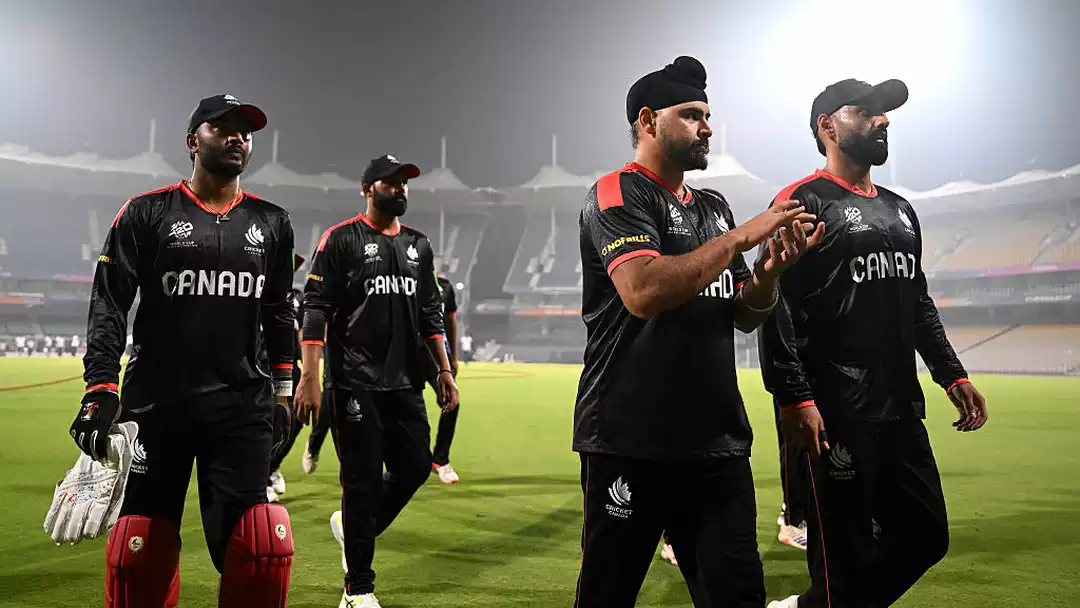
In a landmark set of decisions aimed at strengthening governance and modernising the game, the International Cricket Council (ICC) has suspended Cricket Canada with immediate effect while simultaneously approving several significant reforms across international cricket.
The decisions were taken during the ICC Board meetings held in Ahmedabad on May 31, with governance, playing conditions, qualification pathways, women’s cricket and the growing influence of franchise leagues dominating discussions.
The suspension of Cricket Canada emerged as the most dramatic outcome of the meetings, but it was far from the only major development as the ICC unveiled a series of changes that could shape the future direction of the sport.
Cricket Canada Suspended Over Governance Concerns
The ICC announced that Cricket Canada had been suspended after what it described as “serious breaches” of membership obligations.
While the governing body did not publicly disclose every detail behind the decision, the suspension reflects ongoing concerns regarding governance and administrative standards within Canadian cricket.
Importantly, the ICC clarified that the suspension would not directly affect Canadian players or national teams.
Canada national cricket team and other Canadian representative sides will continue participating in ICC tournaments and international competitions. Funding will also remain available through a controlled mechanism supervised directly by the ICC to ensure players are not disadvantaged by administrative failures.
The ICC will now provide Cricket Canada with a roadmap of reinstatement conditions. Progress toward meeting those requirements will be monitored by the ICC’s Normalisation Committee before any decision on restoring full membership is considered.
The move sends a strong message regarding the importance of governance standards among ICC member nations, particularly at a time when cricket continues expanding into emerging markets.
Pink Ball Could Be Introduced Mid-Test
Among the most intriguing playing-condition changes approved by the Board is a trial allowing teams to switch from a red ball to a pink ball during conventional Test matches.
The proposal is specifically designed to combat one of Test cricket’s long-standing frustrations: loss of playing time due to poor light.
Under the recommendation, participating teams may agree before a match that a pink ball can replace the traditional red ball if deteriorating light conditions threaten to interrupt play.
The ICC believes the change could help preserve playing time while maintaining the integrity of the contest.
In addition, the ICC confirmed plans to collaborate with Marylebone Cricket Club on research into advanced lighting technologies aimed at reducing weather-related interruptions in Test cricket.
Global T20 World Cup Qualifier Returns
Associate nations received a major boost after the ICC approved plans to establish a dedicated Global Qualifier for future Men’s T20 World Cups.
The proposal effectively revives a broader qualification pathway that had been reduced in recent years.
Under the new structure, a 16-team global qualifying tournament will determine additional entrants for future ICC events, providing greater opportunities for emerging cricket nations.
The ICC has tasked its management team with finalising:
- Competition format
- Qualification structure
- Team allocation process
- Scheduling framework
The decision reflects the growing popularity of cricket beyond traditional Full Member nations and acknowledges increasing fan interest in Associate cricket.
Countries outside cricket’s traditional powerhouses now have a clearer route toward reaching major global tournaments.
ALSO READ-Rishabh Pant’s LSG Future in Doubt Despite Captaincy Exit
Permanent Changes to Playing Conditions
Several experimental rules have now been formally adopted into international cricket.
Leg-Side Wide Rule Becomes Permanent
The ICC has permanently approved the leg-side wides interpretation trial.
Under the revised approach, a batter’s position at the moment of delivery becomes the primary reference point when determining whether a ball should be called wide on the leg side.
Supporters believe the adjustment provides greater fairness by accounting for modern batting techniques and movement around the crease.
Hawk-Eye to Assist Illegal Bowling Action Reviews
Match officials will now be permitted to use Hawk-Eye technology when investigating suspected illegal bowling actions.
The addition introduces a more data-driven process into assessments and could help improve consistency when evaluating bowlers reported for suspect actions.
Coaches Gain Greater Match Access
Head coaches, or designated team representatives, will now be allowed to communicate with players during scheduled drinks breaks.
Previously, coaching interactions during matches were more restricted.
The ICC believes the change reflects the increasingly professional nature of modern cricket while maintaining competitive fairness.
Standardised T20I Intervals
T20 Internationals will now feature mandatory 15-minute innings breaks.
The move aims to create greater consistency across international T20 cricket and simplify broadcast scheduling.
Women’s Cricket Receives Major Boost
Women’s cricket was another major focus of the Ahmedabad meetings.
The ICC approved several significant pathway and tournament changes designed to accelerate growth and improve competitiveness.
Women’s Champions Trophy Rescheduled
The ICC Women’s Champions Trophy 2027 has been moved from its original June-July window to February 14-28, 2027.
The scheduling adjustment is expected to improve logistical planning and minimise clashes with other international commitments.
New Women’s Emerging Nations Trophy
A brand-new Women’s Emerging Nations Trophy will launch in 2026.
The competition will feature:
- Five Full Member nations
- Five Associate nations
The tournament aims to bridge the gap between established and developing cricket nations while creating additional competitive opportunities for emerging players.
Women’s T20 World Cup 2028 Qualification Confirmed
The ICC also approved the qualification pathway for the ICC Women’s T20 World Cup 2028.
A 10-team Global Qualifier will feed into the final 12-team tournament.
The World Cup itself will be hosted by Pakistan, although India’s matches are expected to be played at a neutral venue under existing arrangements.
Governance Reviews in Bangladesh and Sri Lanka
The ICC also addressed ongoing governance developments in South Asia.
Representatives will travel to Bangladesh to engage with stakeholders and review recent developments involving the electoral process of the Bangladesh Cricket Board.
Meanwhile, ICC Deputy Chairman Imran Khwaja and Devajit Saikia have already met cricket stakeholders in Sri Lanka to assess governance matters there.
These interventions underline the ICC’s increasing focus on administrative stability across member boards.
Franchise Cricket Under the Spotlight
Perhaps one of the most important long-term discussions involved the rapid growth of franchise cricket worldwide.
Leagues across India, Australia, South Africa, the UAE, the United States and several other countries continue expanding, creating increasing pressure on the international calendar.
Recognising this challenge, the ICC Board agreed to establish a dedicated committee to examine how franchise tournaments can be better harmonised with international cricket.
The committee will explore scheduling conflicts, player availability concerns and broader calendar management issues.
The move highlights growing concerns that the expansion of private franchise leagues could eventually impact bilateral cricket and international competitions if not properly coordinated.
ICC Signals a New Direction
ICC Chairman Jay Shah described the Ahmedabad meetings as an important step toward strengthening governance, expanding opportunities and modernising the game.
From the suspension of Cricket Canada to reforms in Test cricket, women’s cricket and qualification pathways, the decisions demonstrate the ICC’s intent to balance growth with accountability.
While some changes will take time to implement, the outcomes of these meetings could have a lasting impact on how cricket is governed, played and developed around the world over the coming decade.