

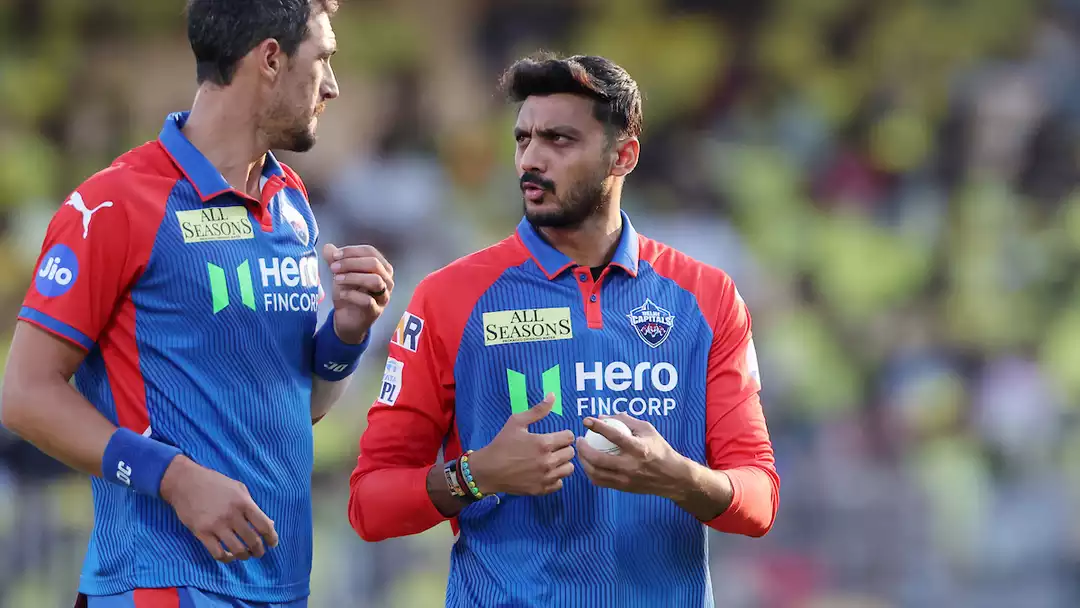
The Delhi Capitals (DC) arrive in Jaipur at a delicate point in their Indian Premier League 2026 campaign—caught between early-season promise and a worrying mid-season drift. Few teams experience such extremes in quick succession: piling up 264 against Punjab Kings and still losing, then collapsing to 75 just two days later. It’s a swing that has exposed both their explosive potential and their fragility.
At this stage of the tournament, teams typically accelerate toward playoff contention. Delhi, instead, are searching for stability—tactically, mentally, and structurally. Their rhythm has gone missing, and in a format where momentum often dictates outcomes, that absence is proving costly.
Starc’s Return: Catalyst, Not Cure
Relief comes in the form of Mitchell Starc, who is set to rejoin the squad from May 1. His return is significant, not just for his skill set but for the psychological lift he brings. Starc’s left-arm pace, ability to swing the new ball, and knack for striking early could provide Delhi with exactly the kind of disruption they need to break their current inertia.
However, expecting him to single-handedly transform the team’s fortunes would be unrealistic. Delhi’s issues extend beyond bowling. Their batting combinations, particularly at the top, remain unsettled, and their inability to build consistent partnerships has repeatedly put pressure on the middle order.
Starc, therefore, is more of a catalyst than a solution—someone who can shift momentum but not entirely fix structural inconsistencies.
Rajasthan Royals: A Team in Flow
Standing in Delhi’s way are the Rajasthan Royals, a side that has recently demonstrated its credentials by handing table-toppers Punjab Kings their first defeat of the season. Unlike Delhi, Rajasthan appear to have clarity in roles and a growing sense of cohesion.
One of the most compelling narratives this season has been the emergence of Vaibhav Sooryavanshi. At just 15, he has shown remarkable composure against elite pace attacks, handling bowlers like Jasprit Bumrah, Bhuvneshwar Kumar, and Josh Hazlewood with surprising ease.
Now, he faces a different challenge in Starc—whose left-arm angle and late swing pose a unique test. This duel adds a fascinating subplot to the contest, blending youth and experience in a high-pressure setting.
Depth Beyond the Top Order
Rajasthan’s recent success hasn’t been limited to their top order. The finishing contributions of players like Donovan Ferreira and Shubham Dubey have added a new dimension to their batting.
In earlier seasons, Rajasthan often relied heavily on their top-order performances. Now, with reliable finishers stepping up, they appear more balanced and resilient. This extended batting depth allows them to recover from early setbacks and maintain scoring momentum deep into the innings.
ALSO READ-Parag Vaping Row Puts BCCI in Grey Zone
Delhi’s Batting Puzzle
If Rajasthan’s strength lies in clarity, Delhi’s weakness lies in uncertainty—especially at the top of the order. Their constant reshuffling has created instability rather than solutions.
Youngster Sahil Parakh had a forgettable debut, dismissed for a duck after just two balls. While it would be harsh to judge him on that outing alone, the team management faces a dilemma: persist with youth or revert to more experienced options.
Abishek Porel showed promise as an Impact substitute, but promoting him to open alongside KL Rahul would mean yet another change. Such constant adjustments risk further disrupting team cohesion.
In the middle order, players like Tristan Stubbs and David Miller have the firepower to change games, but they often arrive under pressure due to early wickets.
Tactical Match-Ups to Watch
One key battle could unfold in the middle overs, where Kuldeep Yadav has historically dominated Donovan Ferreira. Dismissing him twice in just nine balls, Kuldeep could be Delhi’s trump card in breaking Rajasthan’s middle-order momentum.
On the flip side, Rajasthan will rely heavily on Jofra Archer, who has been lethal in the Powerplay with nine wickets this season. If he can remove KL Rahul early, Delhi’s already fragile top order could crumble again.
Conditions and Context
The match at the Sawai Mansingh Stadium is expected to be played under intense heat, with temperatures hovering around 40°C. Traditionally, the black-soil pitch here offers low bounce, but recent matches suggest it can still produce high-scoring encounters.
This unpredictability adds another layer of complexity, forcing teams to adapt quickly rather than rely on preconceived strategies.
A Season at a Crossroads
With both teams evenly matched historically (15-15 head-to-head), this fixture could hinge on execution under pressure. For Rajasthan, it’s an opportunity to consolidate their upward trajectory. For Delhi, it’s a chance to arrest their slide and rediscover their identity.
Captain Axar Patel summed up the situation candidly, emphasizing the need for constant focus and discipline. In a tournament where margins are razor-thin, even a brief lapse can undo weeks of good work.