

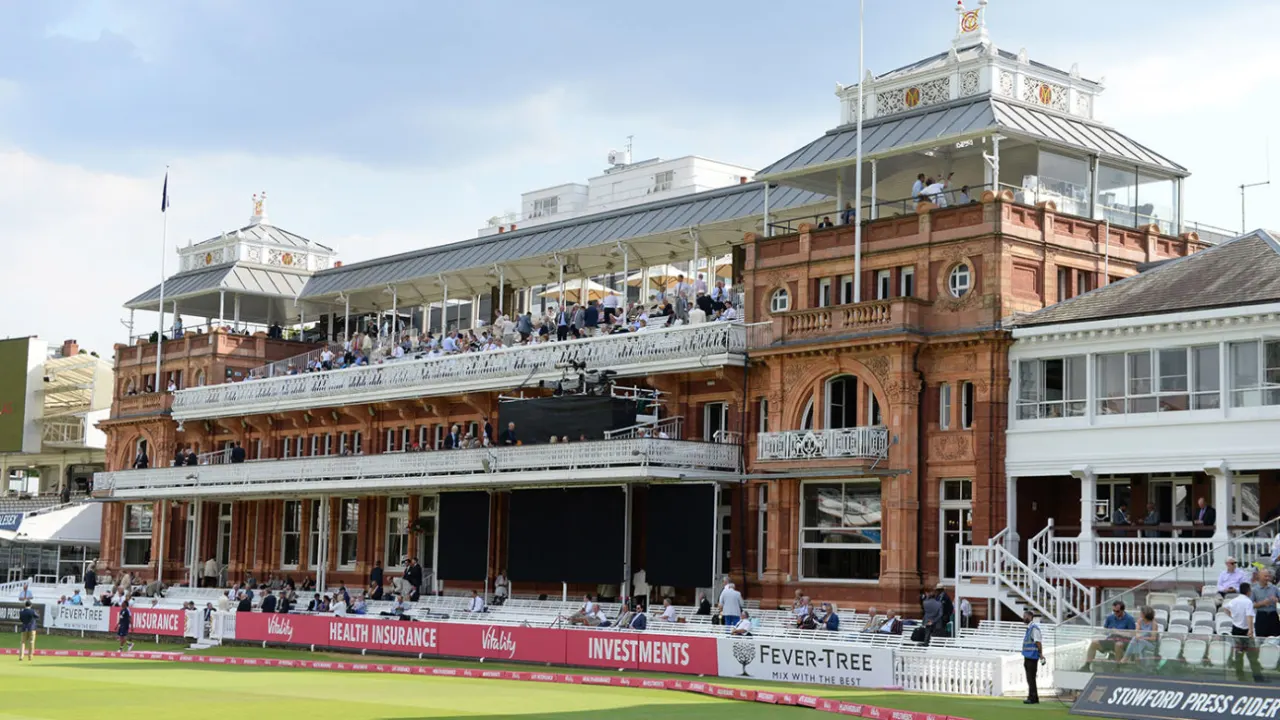
The Marylebone Cricket Club (MCC) has issued a strong appeal to its members to attend Sunday’s Women’s T20 World Cup final at Lord’s regardless of whether England qualify, emphasizing that a full house in the members’ areas is “vital to MCC’s reputation.”
In a letter sent to members who have been allocated tickets for the final, MCC chief executive and secretary Robert Lawson urged attendees to avoid a repeat of the widely criticized scenes witnessed during the 2017 Women’s World Cup final, when the public stands at Lord’s were packed while the members-only sections remained conspicuously underoccupied.
With women’s cricket enjoying unprecedented popularity and record-breaking attendances throughout the ongoing tournament, the iconic venue’s administrators are keen to ensure that the final presents a united and inclusive image of the game.
Memories of 2017 Continue to Haunt MCC
The concerns expressed by the MCC stem from the aftermath of the 2017 ICC Women’s World Cup final at Lord’s, when more than 24,000 spectators witnessed England’s dramatic nine-run victory.
While the public sections of the ground were packed with enthusiastic supporters, television viewers and those present at the stadium could not ignore the sparsely populated pavilion and members’ areas. The visual contrast attracted widespread criticism and raised questions about the commitment of cricket’s traditional institutions to the women’s game.
The criticism came not only from the media but also from within the MCC membership itself, prompting significant introspection at the club.
The issue remained sufficiently important that it was discussed extensively during an MCC Special General Meeting in July last year, when ticketing arrangements for the current Women’s T20 World Cup were being finalized.
Robert Lawson Issues Direct Appeal
In his letter to members, Robert Lawson stressed the importance of demonstrating visible support for women’s cricket irrespective of which teams qualify for Sunday’s final.
“On Sunday, we have the honour of hosting the ICC Women’s T20 World Cup Final,” Lawson wrote.
He acknowledged Australia’s qualification for the final following their semi-final victory and noted that either England or South Africa would join them after Thursday’s second semi-final.
“We can expect a very high-quality match this Sunday,” Lawson said. “I ask that you show your continued support for the game and for your Club by using your ticket(s) and coming to the match, regardless of which teams have made it to the Final.”
The message was clear: attendance should not depend on England’s participation.
Protecting MCC’s Reputation
Lawson was particularly direct when outlining the reputational risks facing the club.
“It is vital to MCC’s reputation that there is no repeat of the situation which occurred at the ICC Women’s World Cup Final at Lord’s in 2017, when there was a clear disparity between the Public Stands (visibly full) and the sparsely-occupied Pavilion,” he stated.
He also extended the appeal to members occupying the Friends’ Enclosures, emphasizing that every section of the ground should reflect the enthusiasm surrounding women’s cricket.
The chief executive concluded by asking members unable to attend to notify the club so that their tickets could potentially be redistributed.
ALSO READ-Hridoy to Lead Bangladesh Against Zimbabwe
MCC’s Ongoing Challenge on Inclusivity
The issue extends beyond attendance figures and touches upon broader questions surrounding inclusivity and representation within one of cricket’s oldest institutions.
The Independent Commission for Equity in Cricket (ICEC), in its landmark report published in 2023, delivered a particularly critical assessment of the MCC’s historical relationship with women’s cricket.
Among its observations was the assertion that “the home of cricket is still a home principally for men.”
The criticism reflected the club’s historical structure. Founded in 1787, the MCC remained an exclusively male institution until 1998, when women were finally permitted to become members.
Today, despite significant reforms, women account for fewer than three percent of the MCC’s approximately 18,350 full members.
The ICEC report also highlighted what it described as the “truly appalling” reality that England Women had never played a Test match at Lord’s.
That long-standing omission will finally be corrected next week when England host India in a historic women’s Test match at the iconic venue.
Women’s Cricket Reaches New Heights
The concerns surrounding Sunday’s final contrast sharply with the remarkable success of the Women’s T20 World Cup as a whole.
The tournament has attracted record-breaking crowds across England and has established new benchmarks for attendance in women’s cricket.
More than 160,000 tickets have been sold during the competition, setting a new attendance record for any ICC women’s tournament and more than doubling the figures recorded during the 2017 Women’s World Cup.
Several venues have witnessed historic attendances:
- Edgbaston hosted 18,814 spectators for the India-Pakistan clash.
- The Oval attracted 21,018 fans for England versus New Zealand.
- Lord’s itself welcomed approximately 27,000 spectators during the final group-stage double-header.
These figures demonstrate the growing mainstream appeal of women’s cricket and the increasing public appetite for elite women’s sporting events.
Tournament Success Praised
Tournament director Beth Barrett-Wild recently hailed the success of the competition and its broader impact on the sport.
“It’s been incredible,” Barrett-Wild said.
“We set out on a mission to break women’s cricket into the mainstream and over the course of the last three weeks we’ve seen record-breaking crowds. I feel like we’ve definitely delivered.”
Her assessment reflects a wider sentiment that women’s cricket has entered a new phase of popularity and commercial viability.
A Defining Moment for Lord’s
As Lord’s prepares to host the Women’s T20 World Cup final, Sunday’s attendance will represent more than simply a measure of spectator interest.
For the MCC, it is an opportunity to demonstrate publicly that the institution has evolved alongside the modern game and fully embraces women’s cricket as an integral part of its future.
With record crowds attending throughout the tournament and global attention focused on the final, the image presented by the pavilion and members’ areas could become one of the defining visual moments of the competition.
For that reason, the MCC’s appeal to its members is not merely about filling seats—it is about protecting the reputation of cricket’s most famous venue while affirming its commitment to the continued growth of the women’s game.