

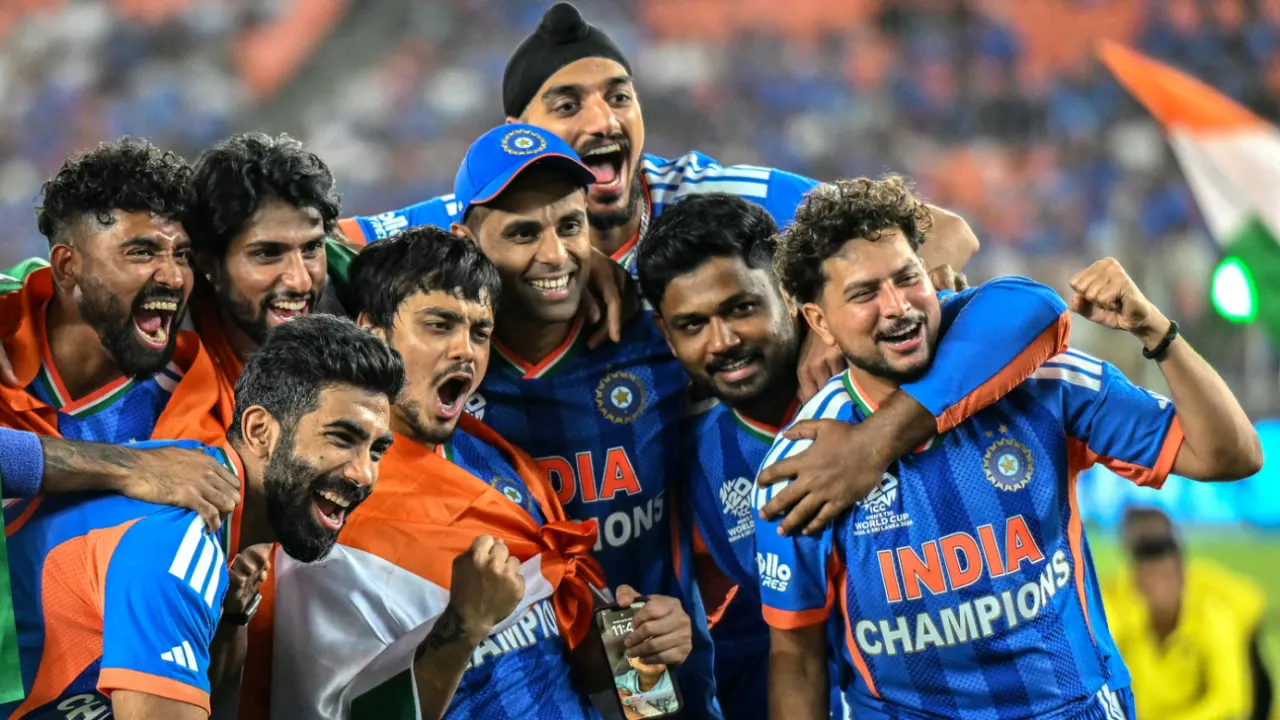
The International Cricket Council (ICC) has announced a major overhaul of the 2028 Men’s T20 World Cup, introducing a new tournament format that promises more high-stakes cricket and fewer dead-rubber matches. The revamped structure will debut at the tournament, which will be co-hosted by Australia and New Zealand in October and November 2028.
While the competition will continue to feature 20 teams and 55 matches, the path to the title has been significantly altered. The ICC has reduced the number of first-round games, expanded the second stage of the tournament, and added two new eliminator matches, effectively creating a quarter-final stage before the semi-finals.
The changes, approved during the ICC’s Annual General Meeting (AGM) in Edinburgh, are aimed at improving competitiveness, rewarding emerging teams, and ensuring every match has greater significance.
A New Look for the First Round
One of the biggest changes comes in the opening stage of the tournament.
In previous editions, the first round consisted of four groups of five teams, with each side playing four matches. That format produced 40 group-stage matches before teams advanced to the Super Eight.
Beginning in 2028, the tournament will instead feature five groups of four teams.
Each team will now play three group matches, reducing the total number of first-round fixtures from 40 to 30.
Despite the reduction in matches, the qualification rule remains unchanged. The top two teams from each group will progress to the next stage, meaning 10 teams will move forward.
The ICC believes this streamlined opening phase will create greater urgency, with every match carrying increased importance.
Super 10 Replaces Super Eight
The second stage of the tournament has also been redesigned.
Instead of the Super Eight, the competition will now feature a Super 10.
The ten qualified teams will be divided into two groups of five teams, where each side will play four matches.
This change increases the number of second-round games from 12 to 20, giving qualified teams more opportunities to compete against top opposition while also creating a more balanced contest.
The larger second stage reflects the ICC’s growing confidence in the competitiveness of emerging cricket nations.
Eliminator Matches Added
Perhaps the biggest innovation in the new format is the introduction of two eliminator matches before the semi-finals.
Previously, only the top two teams from each Super Eight group qualified directly for the semi-finals.
Under the new system, only the winner of each Super 10 group will earn an automatic semi-final berth.
The teams finishing second and third in each group will instead play cross-group eliminator matches.
Second place from Group A will face third place from Group B, while second place from Group B will meet third place from Group A. The winners of those two matches will complete the four semi-final spots.
These additional knockout fixtures effectively introduce a quarter-final stage without increasing the tournament’s total number of matches.
ALSO READ-ICC Unveils New Format for 2027 ODI World Cup
Why the ICC Changed the Format
According to the ICC, the revised format is a direct response to the impressive performances of emerging cricket nations during the 2026 Men’s T20 World Cup in India and Sri Lanka.
Several Associate nations produced memorable performances, demonstrating that the gap between established Full Members and developing teams continues to narrow.
The governing body believes the new structure will allow more emerging teams to reach the Super 10 stage while maintaining a high standard of competition.
The ICC says the revised format will reward strong performances, reduce dead-rubber fixtures, increase meaningful matches, and keep qualification battles alive until the final group games.
Same Number of Matches
Although two extra knockout games have been introduced, the tournament will still feature 55 matches.
This has been made possible by reducing the number of first-round fixtures while expanding the second stage.
As a result, fans will see more matches involving stronger teams during the latter half of the tournament without extending the competition.
Twelve Teams Already Qualified
Twelve teams have already booked their places for the 2028 T20 World Cup.
The qualified teams are Australia, New Zealand, India, England, Pakistan, South Africa, Sri Lanka, West Indies, Zimbabwe, Afghanistan, Bangladesh and Ireland.
Australia and New Zealand qualify automatically as hosts, while several teams earned direct qualification through their performances in the 2026 T20 World Cup. Afghanistan, Bangladesh and Ireland secured their places via the ICC T20I rankings.
Global Qualifier Returns
The remaining eight places will be decided through a Global Qualifier, subject to final approval by the ICC Board.
The proposed 16-team qualifying event will include Canada, Italy, Namibia, Nepal, Netherlands, Oman, UAE and USA, along with eight additional teams emerging from regional qualifying tournaments across Africa, Asia, Europe, the Americas and East Asia-Pacific.
This system provides Associate nations with another pathway to qualify for the biggest tournament in T20 cricket.
Scotland’s Qualification Path
The ICC also confirmed that Scotland, who featured in the 2026 T20 World Cup after replacing Bangladesh, will not receive direct entry into the Global Qualifier.
Instead, Scotland will compete in the Europe Regional Final before attempting to secure qualification through the standard pathway.
The ICC described the decision as a result of the exceptional circumstances surrounding Scotland’s participation in the previous edition.
The revised format is expected to make the 2028 Men’s T20 World Cup more competitive than ever before.
With more teams progressing to the Super 10 stage, additional knockout matches, and fewer meaningless fixtures, every game is expected to have greater significance.
The changes also reflect the ICC’s commitment to giving emerging cricket nations more opportunities while maintaining a high standard of competition.
As Australia and New Zealand prepare to host the tournament, cricket fans can look forward to a World Cup featuring more pressure, more knockout cricket, and a tougher road to the championship than ever before.