

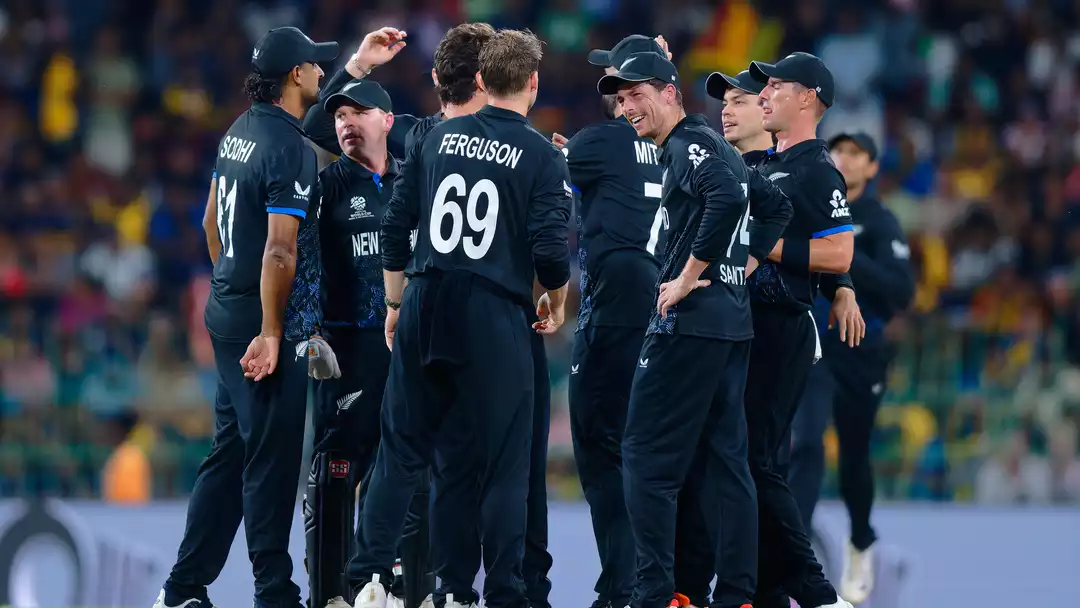
For New Zealand, the transition is more abrupt. After spending over a week in Sri Lanka adjusting to slower surfaces and heavy spin usage, they now face a recalibration. But they will take comfort in one thing: they are here. In a tournament where their campaign never quite sparked into life, they have still secured a top-four finish — and that alone resets the narrative.
It might have been Pakistan making this trip. It might even have been a last-minute dash to Colombo. But tournament permutations shifted, results fell a certain way, and now it is South Africa who find themselves in Kolkata preparing for a T20 World Cup semifinal at Eden Gardens.
On paper, that may suit them just fine.
South Africa’s batting unit thrives on pace, carry and true bounce — the kind of conditions that allow stroke-makers to trust the surface and hit through the line. Kolkata, with its typically fast outfield and manageable square boundaries, offers exactly that. Colombo, by contrast, with its larger dimensions and spin-friendly tracks, might have demanded a different approach altogether.
The Stakes: One Ticket to Ahmedabad
When: March 4, 7 PM IST
Where: Eden Gardens, Kolkata
Once the lights blaze and the anthem fades, previous matches, historical baggage and external chatter dissolve. What remains is simple — one semifinal, one winner, one place in the final in Ahmedabad.
The backstory adds intrigue. South Africa arrive with seven consecutive wins and the aura of a side that has done little wrong. New Zealand arrive with questions — but also with the dangerous freedom of a team that knows it hasn’t yet peaked.
Mitchell Santner could easily frame this as unfinished business. His side has been imperfect, inconsistent at times. But in knockout cricket, imperfection is irrelevant. Only performance on the night matters.
On the other side, Aiden Markram’s challenge is different. How does he prevent overconfidence from creeping in? The answer, if his recent comments are any indication, is simplicity: do not change what is working.
Conditions and Tactical Expectations
The pitch for this clash lies adjacent to the one used for India’s recent fixture here. Square boundaries are almost symmetrical, and the surface has a dry look — though not necessarily sluggish.
High scores are likely once again, but bowlers should not be written off. The dimensions are smaller than Colombo, meaning mishits can clear the ropes. Yet spinners may still extract grip if they hit the right lengths.
Santner acknowledged as much, emphasizing adaptability. Seamers will have a role, particularly with the new ball, but the balance between pace and spin will be crucial.
South Africa: Power, Depth and Middle-Overs Dominance
South Africa’s tournament blueprint has been clear: dominate the middle overs and finish ruthlessly. Their run rate of 9.65 between overs 7 and 15 is the best in the competition — a statistic that underlines their ability to maintain pressure beyond the powerplay.
Markram is expected to recall key players rested in the previous fixture. Marco Jansen, Kagiso Rabada and Keshav Maharaj should all return, strengthening both pace and spin departments.
Probable XI – South Africa
Aiden Markram (c), Quinton de Kock (wk), Ryan Rickelton, Dewald Brevis, David Miller, Tristan Stubbs, Marco Jansen, Corbin Bosch, Kagiso Rabada, Keshav Maharaj, Lungi Ngidi
David Miller’s record at Eden Gardens adds another layer of intrigue. He has amassed 249 runs in nine T20s here at an average of 62.25 and a strike rate above 148 — numbers that suggest comfort with both surface and boundaries.
New Zealand: Tactical Flexibility Under Scrutiny
New Zealand’s semifinal preparation has revolved around selection puzzles.
Matt Henry, who briefly returned home for the birth of his child, is rejoining the squad. However, his match readiness remains uncertain. Should he fall short, Jacob Duffy is the most likely replacement after extended spells in the nets alongside Kyle Jamieson.
Against England in Colombo, New Zealand fielded five spinners — a strategy that may not translate to Kolkata. A more balanced XI seems probable, with James Neesham potentially coming in for Cole McConchie to add seam-bowling depth and finishing power.
Probable XI – New Zealand
Tim Seifert (wk), Finn Allen, Rachin Ravindra, Glenn Phillips, Daryl Mitchell, Mark Chapman, Mitchell Santner (c), Cole McConchie/James Neesham, Matt Henry/Jacob Duffy, Ish Sodhi, Lockie Ferguson
There are intriguing head-to-head matchups. Lockie Ferguson has dismissed Quinton de Kock three times in 23 balls across T20 encounters. Meanwhile, Finn Allen has attacked Lungi Ngidi at a staggering strike rate of nearly 278 in previous meetings.
These micro-battles could define the macro outcome.
ALSO READ –IPL 2026 Schedule to Be Released in Two Phases
Mindset vs Momentum
South Africa’s recent ICC knockout history often resurfaces in discussions. Yet Markram appears uninterested in revisiting those chapters. Two years ago, they crushed Afghanistan in a similar stage before falling short in the final. For him, the narrative is neither burden nor motivation — just background noise.
New Zealand, conversely, carry less external pressure. They have not dominated headlines this tournament. Their campaign has been steady rather than spectacular. That unpredictability could make them dangerous.
Santner has emphasized adaptability — a trait that has long defined New Zealand cricket. The move from Colombo’s expansive squares to Kolkata’s central dimensions demands quick recalibration, and his team has historically shown the capacity to adjust on the fly.
This semifinal is less about past records and more about present conviction. South Africa arrive with rhythm, New Zealand with resilience. Neither side is flawless; both are capable of brilliance.
Once the contest begins at Eden Gardens, narratives of vulnerability or dominance fade. There will be only one equation that matters: who handles the pressure better over 40 overs.
And at the end of it, one team will book a flight to Ahmedabad — and a shot at the trophy.