

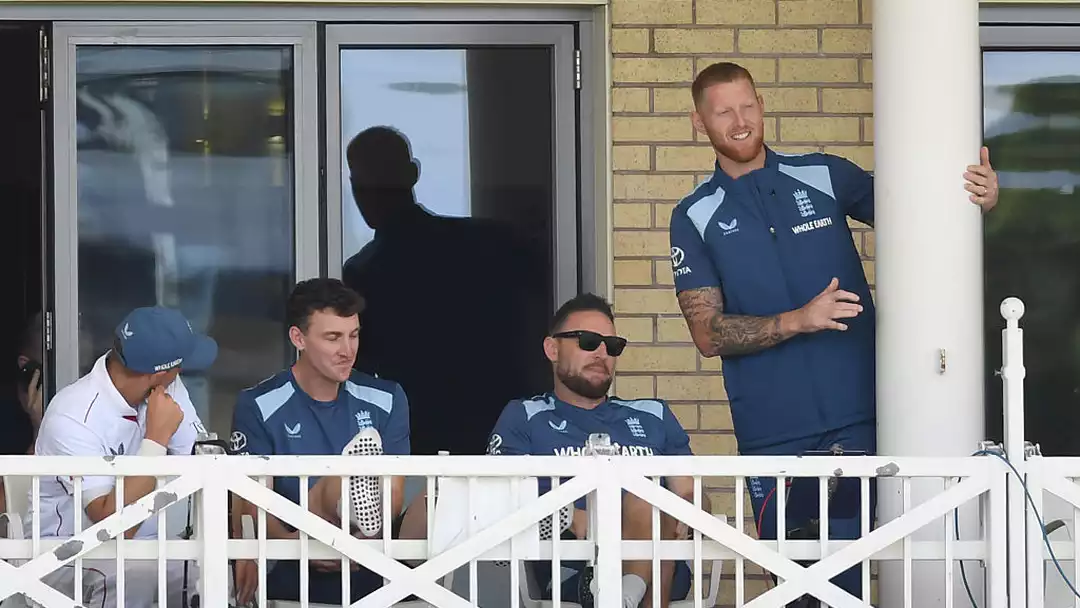
Retiring England Test captain Ben Stokes has thrown his full support behind Harry Brook as his successor, backing the star batter to take over the leadership of England’s red-ball side in the future.
Stokes, who transformed England’s Test fortunes during his tenure as captain alongside head coach Brendon McCullum, believes Brook is the natural choice to lead the team after him. The endorsement comes despite England opting to appoint former captain Joe Root as stand-in skipper during the recent Oval Test against New Zealand when Stokes was unavailable.
Speaking after his final Test appearance, Stokes made it clear that he sees Brook as the long-term leader of England’s Test side and believes additional responsibility could further elevate the 27-year-old’s already exceptional performances.
Stokes Endorses Brook as His Successor
Harry Brook’s rise within England’s leadership structure has been rapid and deliberate.
Already serving as England’s captain in both One-Day Internationals and T20 Internationals, Brook has also been operating as Stokes’ deputy in Test cricket. For Stokes, that position alone should make Brook the obvious successor whenever a transition takes place.
“There’s a reason why he was asked to be vice-captain of this team,” Stokes explained while discussing England’s future leadership plans.
The outgoing captain emphasized that leadership succession in cricket often follows a natural progression, drawing parallels with his own journey under Joe Root’s captaincy.
“I was vice-captain under Joe for a long time and it’s a natural progression. If the captain’s not there or unavailable then you step up to be that,” Stokes said.
His comments reinforce the belief that England have been preparing Brook for greater leadership responsibilities for some time.
Oval Decision Raised Questions
Questions regarding England’s future captaincy structure intensified during the recently concluded Test series against New Zealand.
When Stokes was unavailable for the Oval Test due to disciplinary reasons, England’s management selected Joe Root to captain the side rather than Brook. The decision surprised many observers given Brook’s status as vice-captain and prompted speculation regarding the hierarchy within the leadership group.
However, Stokes clarified that he had no involvement in the decision-making process surrounding the appointment of the stand-in captain.
“I know with all the controversy over the last couple of weeks, there were some decisions that were made, but those were decisions that I wasn’t part of making,” he explained.
His comments suggest that the decision to appoint Root should not necessarily be interpreted as a lack of confidence in Brook’s leadership credentials.
ALSO READ-Kamalini Earns India Asian Games Call-Up
Harry Brook’s Leadership Journey
At just 27 years of age, Harry Brook has already established himself as one of England’s most important cricketers across all formats.
His elevation to white-ball captaincy reflected the confidence that selectors and team management have in his leadership abilities. Simultaneously serving as Test vice-captain has further strengthened his credentials to eventually lead England in the longest format.
Brook’s cricketing intelligence, calm temperament, and ability to perform under pressure have consistently been cited as qualities that make him a natural leader.
Moreover, his growing experience across formats provides him with a broad understanding of modern cricket, an attribute increasingly valued in international captains.
Stokes Believes Responsibility Could Improve Brook Further
One of the most interesting aspects of Stokes’ endorsement was his suggestion that captaincy could potentially enhance Brook’s batting even further.
Historically, many elite cricketers have thrived when entrusted with leadership responsibilities, using the additional accountability to elevate their performances.
“We all know he’s a phenomenally talented individual when it comes to his skill as a batter,” Stokes said.
The former captain went on to suggest that leadership could unlock another level in Brook’s already exceptional game.
“If you lump a bit more responsibility on his shoulders with this team, we don’t know if that’s going to show any more improvement in the skills that he’s already got.”
This belief reflects the confidence Stokes has developed in Brook not only as a player but also as a future leader capable of carrying additional responsibilities without compromising his individual performances.
England’s Transition Era Continues
The discussion surrounding England’s next Test captain comes at a significant moment for the national side.
Stokes’ captaincy tenure transformed England’s approach to Test cricket through the aggressive and entertaining style popularly known as “Bazball.” Together with Brendon McCullum, he reshaped the team’s philosophy and restored confidence following a difficult period.
As England prepare for life after Stokes, ensuring continuity in leadership and culture will be critical.
Harry Brook, having developed within the Stokes-McCullum environment, appears uniquely positioned to continue many of the principles that have defined England’s recent resurgence.
His appointment would likely represent continuity rather than a radical change in direction.
Joe Root’s Temporary Return to Leadership
While Joe Root’s appointment as stand-in captain during the Oval Test generated discussion, his experience made him a reliable short-term option.
Root previously captained England in 64 Test matches and remains one of the most respected figures within the dressing room. His leadership experience provided stability during a period of uncertainty following the disciplinary issues involving Stokes and Gus Atkinson.
However, few observers expect Root to return to the role permanently, particularly given England’s apparent long-term investment in Brook’s leadership development.
Full Support From England’s Departing Captain
Perhaps the strongest message from Stokes’ comments was the unequivocal nature of his support.
“Only time will tell, but you don’t ask someone to be vice-captain if you don’t think they’ve got the skills and the ability to be able to captain the team when they need to,” he said.
He concluded by making his position crystal clear.
“If I was to be asked who I think should do it, I’m throwing my 100% support behind Harry Brook.”
For a player who has led one of England’s most successful and transformative periods in Test cricket, that endorsement carries considerable weight.
Whether England’s selectors ultimately follow Stokes’ recommendation remains to be seen, but one thing appears increasingly certain: Harry Brook’s future as a leader of English cricket is only just beginning.