

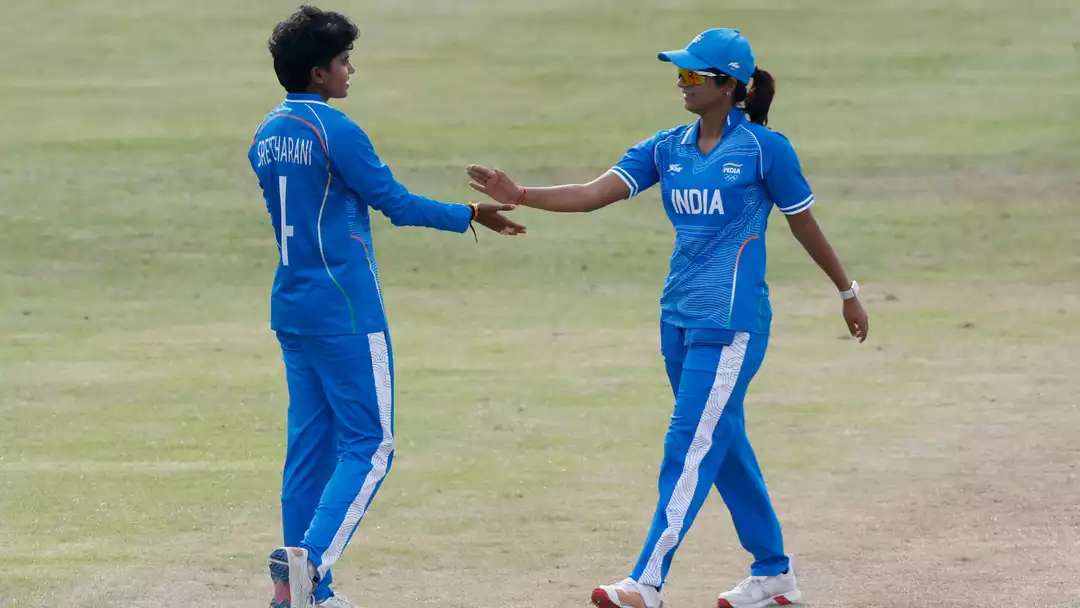
India produced a clinical all-round performance to storm into the semifinal of the Women’s Asian Games cricket competition, defeating Japan by eight wickets in a one-sided quarterfinal. The defending champions barely allowed their opponents any breathing room, first dismantling Japan with a superb spin-bowling display before completing the chase in just five overs.
After winning the toss and deciding to field, India immediately put their spinners into action. The decision proved highly effective as Japan struggled throughout their innings to cope with the slow bowlers. India’s four spinners bowled a combined 95 deliveries and accounted for eight of Japan’s wickets, restricting the hosts to just 57 runs in 19.5 overs.
The result highlighted the enormous difference between the two sides on the day. While Japan’s batters found it difficult to score consistently, India’s bowlers maintained pressure from the beginning and rarely offered easy scoring opportunities.
Shree Charani Leads India’s Spin Attack
The biggest star with the ball was left-arm spinner Shree Charani. She delivered a superb spell of four overs, finishing with career-best figures of 4 for 10.
Charani’s spell was particularly impressive because of the pressure she created with dot balls. She bowled 20 dot deliveries during her four overs, leaving Japan’s batters with very little opportunity to rotate the strike or build partnerships.
Her disciplined bowling set the tone for India’s overall performance. Rather than relying heavily on pace, India used spin to exploit the conditions and keep Japan’s batters under constant pressure.
Shafali Verma also contributed with the ball, picking up two wickets for 13 runs. Deepti Sharma and Shreyanka Patil claimed one wicket each as India’s spin quartet systematically dismantled the Japanese batting order.
Japan eventually lost their final wicket at 57, leaving India with a straightforward target of 58.
ALSO READ-Rishabh Pant Named Rest of India Captain for Irani Cup
Ayaka Kato-Stafford Offers Resistance
Japan’s innings never really gathered momentum, but opener Ayaka Kato-Stafford showed considerable patience in difficult circumstances.
Kato-Stafford faced 47 deliveries for her 25 runs, spending a significant amount of time at the crease while wickets fell around her. Her innings became the backbone of Japan’s score, although she was unable to find enough support from the other end.
Haruna Iwasaki was the only other Japanese batter to reach double figures. The lack of partnerships proved costly, as Japan repeatedly lost wickets before they could establish any meaningful momentum.
India’s bowling attack also deserves credit for maintaining its discipline. The bowlers did not allow Japan to escape the pressure through easy boundaries or frequent singles, and the mounting dot-ball count eventually forced the Japanese batters into difficult situations.
Japan Finds Two Early Breakthroughs
Although the result was never seriously in doubt, Japan did manage to create a few moments of excitement during India’s chase.
Nonoha Yasumoto made an immediate impact with the ball, bowling a wicket-maiden to dismiss Gunalan Kamalini. It was an excellent start for Japan and briefly gave the hosts some hope of putting pressure on the defending champions.
Kato-Stafford then contributed with the ball as well. Her leg-spin delivery induced a false shot from Bharti Fulmali, giving Japan their second wicket.
With India at 2 wickets down, Japan had a brief opportunity to make the chase more competitive. However, that moment disappeared almost instantly once Shafali Verma took control.
Shafali Verma Ends the Contest Quickly
Shafali Verma turned what could have been a cautious chase into a spectacular display of attacking batting.
The India opener smashed an unbeaten 40 from only 15 balls, striking six fours and two sixes. Her innings came at an extraordinary pace and ensured that India needed only five overs to reach 59 for 2.
Shafali’s aggressive approach completely changed the atmosphere of the chase. Instead of allowing Japan’s bowlers to settle into a rhythm, she attacked them from the outset and finished the match before the Japanese side could build any sustained pressure.
Her performance was particularly notable because she had already played an important role with the ball earlier in the match. After taking two wickets, she returned to the crease and provided the finishing touch with the bat.
India eventually reached 59 for 2 in just five overs, securing an eight-wicket victory.
India’s Spin Dominance Defines the Match
The quarterfinal was essentially decided during Japan’s innings. India’s ability to use spin effectively created a huge difference between the teams.
The Indian spinners combined to take eight wickets, while the enormous number of dot balls prevented Japan from establishing any momentum. With wickets falling regularly, Japan were never able to produce the kind of partnership required to post a competitive total.
Charani’s 4 for 10 was the standout individual bowling effort, but the performance was ultimately a collective one. Shafali, Deepti and Shreyanka all played their part, demonstrating India’s depth in the spin department.
The bowling effort also meant India’s batters had very little work to do. A target of 58 gave them freedom to attack, and Shafali made full use of that opportunity.
Defending Champions Through to the Semifinal
The comprehensive victory takes India into the semifinal, where they will meet Bangladesh.
India entered the knockout stage as the defending champions, and their performance against Japan showed why they remain a formidable side in the competition. The combination of disciplined bowling and explosive batting allowed them to finish the quarterfinal with minimal fuss.
For Japan, the defeat was a difficult end to their campaign, but Kato-Stafford’s determined effort provided one of the few highlights from their batting innings. The hosts simply found themselves up against an Indian side that was able to control the game in every major department.
The upcoming semifinal against Bangladesh will provide a considerably different challenge. India will now look to carry the same bowling discipline and attacking intent into the next stage of the competition.
For the moment, however, the defending champions can take plenty of confidence from their quarterfinal performance. Shree Charani’s career-best spell, India’s dominant spin attack and Shafali Verma’s explosive 15-ball 40 combined to make it a remarkably quick and convincing victory.
Match Summary
Japan: 57 all out in 19.5 overs
India: 59/2 in 5 overs
Top scorer: Ayaka Kato-Stafford – 25
India’s best bowler: Shree Charani – 4/10
India’s best batter: Shafali Verma – 40* off 15 balls
Result: India won by 8 wickets
Next match: India vs Bangladesh, semifinal
India’s emphatic win has set up the next stage of their title defence, with the team now just one victory away from reaching the final.