

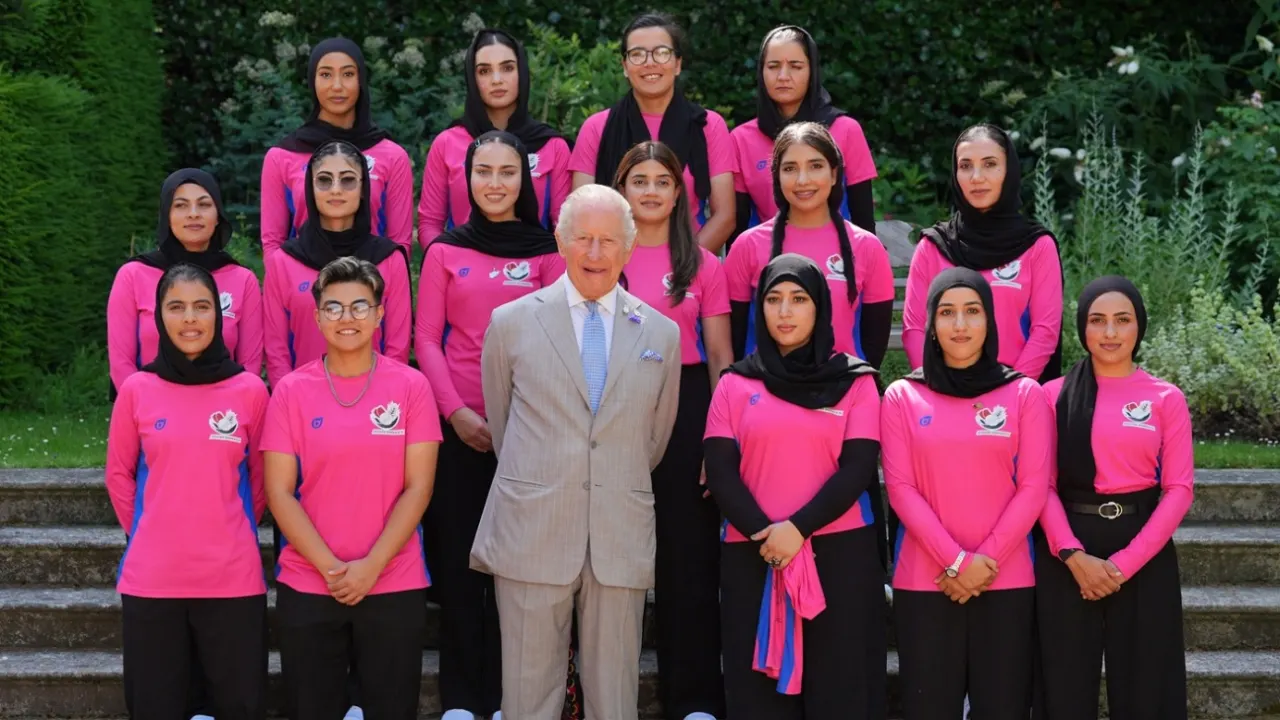
The International Cricket Council (ICC) has taken a significant step toward giving Afghanistan’s refugee women cricketers a place on the international stage by outlining, for the first time, a clear roadmap that could see the team compete in ICC qualification events by 2030.
The decision was announced during the ICC Annual Conference in Edinburgh, where the governing body reconstituted its Special Taskforce to oversee the long-term development of the Afghan refugee women’s team.
While the players will not represent Afghanistan officially due to the Afghanistan Cricket Board’s (ACB) inability to support a women’s team under the Taliban regime, the new initiative opens the door for them to play international cricket under a different identity.
ICC Unveils Long-Term Roadmap
The ICC’s latest plan marks the first time a timeline has been established for the refugee team to enter the global cricket pathway.
The Special Taskforce, originally formed to support displaced Afghan women cricketers, has now been expanded to include new ICC Independent Director Dr. Ros Rivaz and Cricket Ireland Chief Executive Sarah Keane.
They join representatives from the Board of Control for Cricket in India (BCCI), the England and Wales Cricket Board (ECB), and Cricket Australia (CA) in designing a structured programme aimed at preparing the team for international qualification events by 2030.
The roadmap includes regular coaching, fitness support, physiotherapy, training camps and competitive fixtures to help the players develop as an international unit.
Why the Team Cannot Represent Afghanistan
Although Afghanistan received Full Member status from the ICC in 2017 with a commitment to develop both men’s and women’s cricket, those plans came to a halt after the Taliban returned to power in 2021.
The Taliban’s restrictions on women’s participation in sports forced the Afghanistan women’s cricket programme to shut down before it could play an official international match.
Most of the contracted players fled the country and eventually resettled in Australia, while others moved to Canada and the United Kingdom.
As a result, the refugee players currently remain outside the Afghanistan Cricket Board’s official structure and therefore cannot compete as Afghanistan.
Instead, the ICC is exploring ways for them to participate internationally under a separate banner.
ALSO READ-Stephen Fleming Steps Down as CSK Head Coach After 18 Years
Progress Since Leaving Afghanistan
Despite the enormous challenges they have faced, the refugee players have continued pursuing their cricketing dreams.
The Afghanistan Women’s XI played together for the first time in Melbourne in January 2025, marking a historic reunion after several years apart.
Since then, the squad has toured India during the 2025 Women’s ODI World Cup and travelled to England alongside the 2026 Women’s T20 World Cup, gaining valuable experience through exhibition matches and training opportunities.
These programmes have been funded through a collaborative ICC initiative supported by the BCCI, ECB, Cricket Australia and the fundraising campaign Pitch Our Future.
The ICC has confirmed that financial and logistical support will continue as part of the long-term development plan.
Structured Development Programme
Beyond overseas tours, the Special Taskforce will also oversee year-round player development.
The programme will provide coaching and physiotherapy in the countries where the players now live, while ensuring they continue to play competitive domestic cricket in their respective local environments.
Regular group training camps and international tours will also help strengthen team chemistry and prepare the squad for future qualification events.
The ICC believes this combination of individual development and collective preparation will give the players the best chance of becoming competitive by 2030.
Players Welcome ICC Commitment
The announcement has been warmly received by the refugee cricketers, who described it as a major source of hope for their future.
Player Nahida Sapan said the programme has done much more than simply allow them to continue playing cricket.
She explained that it has helped reunite teammates separated by displacement while giving them the opportunity to train and grow together once again.
Sapan also welcomed the ICC’s long-term commitment, saying it reinforces the principle that Afghan women deserve the same opportunities as cricketers from every other nation.
Fellow player Firooza Afghan described the team’s tours to India and England as unforgettable experiences and said the possibility of competing in ICC qualification events provides a clear target for the entire squad.
She added that the players are determined to make the most of every opportunity over the coming years.
Qualification Pathway Yet to Be Finalised
One important question still remains unanswered—where the refugee team will compete.
The Afghanistan men’s team currently belongs to the ICC’s Asian regional structure through the Afghanistan Cricket Board.
However, because the majority of the refugee women are now based in Australia, the East Asia-Pacific regional qualification pathway has emerged as a possible alternative.
The ICC has not yet confirmed which regional qualification system the team will enter.
Strong Support from Cricket Community
Former Australia international Mel Jones, who has played an important role in supporting many of the refugee players since their relocation to Australia, welcomed the ICC’s announcement.
Jones said the roadmap sends a powerful message that talent, determination and hard work deserve opportunities regardless of circumstances.
She praised the remarkable progress made by the players over the past year and expressed confidence that the team can become highly competitive if provided with sustained support over the next several seasons.
A Historic Opportunity
The ICC’s latest initiative represents one of the most significant developments for displaced athletes in international cricket.
For a group of players whose dreams appeared to end following the Taliban’s return to power, the roadmap offers a realistic pathway back to international competition.
While they may not wear Afghanistan’s official colours, the opportunity to compete on the global stage by 2030 symbolizes resilience, hope and the enduring power of sport to overcome extraordinary adversity.
If the programme succeeds, the Afghan refugee women’s team could become one of cricket’s most inspiring success stories.