

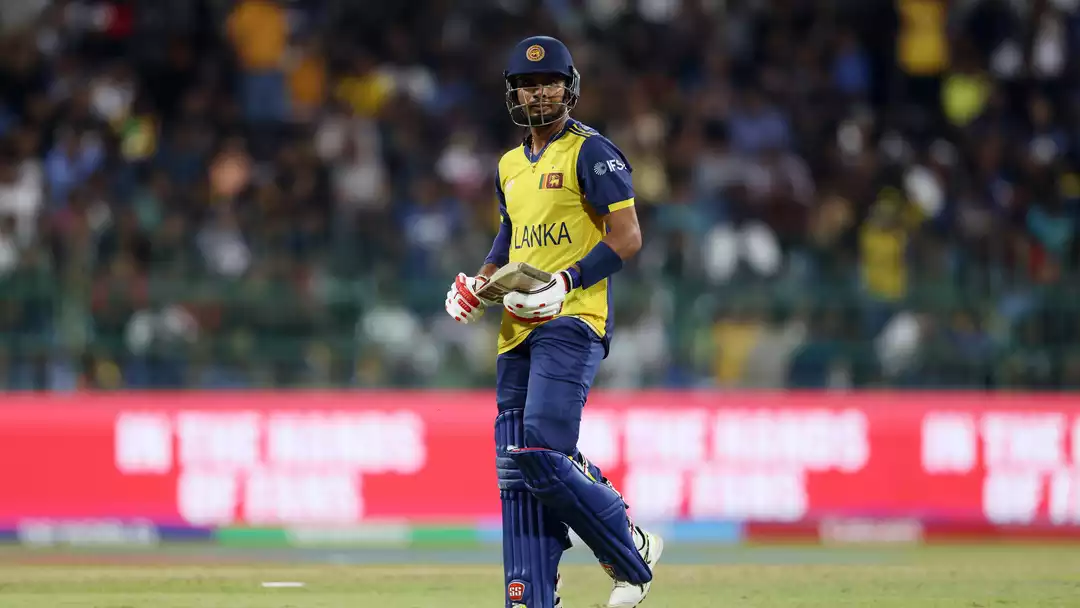
Sri Lankan all-rounder Dasun Shanaka has been handed a one-year ban from the Pakistan Super League (PSL) following a contractual dispute with the league and franchise Lahore Qalandars. The decision comes after a formal review by the Pakistan Cricket Board, which found Shanaka guilty of breaching player agreement terms during the ongoing PSL 2026 season.
What Led to the Ban?
Shanaka, 34, had initially signed with Lahore Qalandars for PKR 75 lakh to participate in PSL 2026. However, he withdrew from the tournament on March 21, a move that raised eyebrows within cricketing circles. Just a day later, he joined the Rajasthan Royals in the Indian Premier League 2026 as a replacement for Sam Curran.
This sequence of events triggered a contractual review by the PCB, which concluded that Shanaka’s withdrawal was unilateral and not justified under the league’s regulations.
According to the PCB’s official statement, the decision to withdraw did not fall within the acceptable grounds outlined in the Player Registration terms or the Tripartite Agreement signed between the player, franchise, and board. As a result, the board deemed it necessary to take disciplinary action to protect the integrity and exclusivity of the league.
PCB’s Stand: Protecting League Integrity
The PCB emphasized that such actions undermine the credibility of the PSL, especially at a time when global franchise leagues are competing for player availability. The board acknowledged Shanaka’s regret but maintained that the violation was serious enough to warrant a ban.
“The withdrawal constituted a clear breach,” the review stated, underlining that regulatory action is essential to maintain fairness and contractual discipline across the league.
This move also sends a strong message to other players about the importance of honoring league commitments, particularly in an increasingly competitive franchise cricket ecosystem.
Shanaka Issues Public Apology
In response to the ruling, Dasun Shanaka expressed deep regret for his actions. He apologized to Pakistani fans, the Lahore Qalandars franchise, and the broader cricket community.
Shanaka clarified that at the time of withdrawing from the PSL, he had no intention of joining another tournament. However, the timing of his subsequent signing with Rajasthan Royals created a perception of prioritizing the IPL over PSL commitments.
He also reiterated his respect for Pakistani fans and expressed hope of returning to the PSL in the future, stating his desire to rebuild trust and participate with renewed dedication.
ALSO READ-CSK Hit by Ayush Mhatre Injury Ahead of MI Clash
Growing Trend: PSL vs IPL Conflict
Shanaka’s case highlights a broader issue in modern franchise cricket—the scheduling clash between the PSL and the IPL. Over the past few seasons, both leagues have operated in overlapping windows, leading to conflicts of interest for players.
The Indian Premier League, being the most lucrative T20 competition globally, often attracts players away from other leagues when opportunities arise. This has resulted in several high-profile withdrawals from the PSL.
For instance, South African player Corbin Bosch opted out of a contract with Peshawar Zalmi last year to join the Mumbai Indians. Similarly, players like Blessing Muzarabani and Spencer Johnson also switched leagues this season, with Muzarabani receiving a two-year PSL ban.
These instances indicate a growing pattern that leagues like the PSL are now actively trying to curb through stricter enforcement of contracts.
Implications for Players and Leagues
The ban on Shanaka underscores the importance of contractual obligations in franchise cricket. As leagues expand and compete globally, maintaining professionalism and adherence to agreements becomes critical.
For players, this serves as a reminder that short-term gains—such as switching to more lucrative leagues—can have long-term consequences, including bans and reputational damage.
For leagues like the PSL, enforcing such rules is essential to ensure stability, credibility, and fairness. Without strict governance, teams could face uncertainty regarding player availability, affecting the overall quality of the tournament.
Dasun Shanaka’s one-year ban marks another chapter in the ongoing tension between global T20 leagues. While his apology reflects accountability, the incident reinforces the need for clearer scheduling coordination and stronger contractual frameworks in franchise cricket.
As the sport continues to globalize, balancing player freedom with league commitments will remain a key challenge. For now, the PCB’s decision sends a clear message: contractual integrity is non-negotiable.