

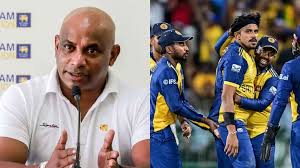
Sri Lanka’s World Cup campaign ended in heartbreak, and with it came a significant announcement. Sanath Jayasuriya has revealed that he intends to step down as head coach of the Sri Lanka men’s cricket team, describing the recent tournament as his final assignment in the role.
The decision follows Sri Lanka’s narrow defeat to Pakistan, a loss that officially ended their World Cup journey. While Jayasuriya has not yet formally communicated his resignation to Sri Lanka Cricket, he confirmed that the choice had been made well before the tournament concluded.
“I thought it was time to give it to someone else,” Jayasuriya explained. “About two months ago, during the England series, I had already made up my mind that I wouldn’t continue for long. I hoped to leave on a good note at the World Cup, but unfortunately, it didn’t happen the way I wanted.”
A Decision Made Months Ago
Jayasuriya’s comments suggest that his departure was not a reactionary move driven by Sri Lanka’s World Cup performance. Instead, it appears to be a carefully considered step, taken after reflecting on his tenure and the direction of the team.
His contract runs until June, and he acknowledged that discussions with the board are still pending. Sri Lanka are scheduled to embark on a limited-overs tour of Afghanistan beginning March 13, although that series faces uncertainty due to geopolitical tensions in West Asia. Whether Jayasuriya remains in charge for that assignment may depend on how quickly the board identifies a successor.
“If they can get somebody, then definitely they should do that,” he said, indicating openness to a smooth transition rather than an abrupt exit.
Early Successes Under His Leadership
Jayasuriya took over as head coach shortly after the 2024 T20 World Cup. His initial months in charge were widely regarded as productive and encouraging. Under his leadership, Sri Lanka secured their first ODI bilateral series win against India in 27 years in August 2024 — a milestone that signaled renewed competitiveness in the 50-over format.
That momentum carried into the Test arena. Sri Lanka stunned England with a victory at The Oval in September 2024 before completing a 2-0 home Test series win against New Zealand. These performances helped improve Sri Lanka’s standing in global rankings and restored confidence within the squad.
Reflecting on his tenure, Jayasuriya emphasized the measurable progress made across formats.
“When I started, we were ranked eighth or ninth in ODIs and hadn’t even qualified for a Champions Trophy,” he noted. “We’ve moved up to No. 4. In Tests, we’re sixth now, and in T20s we’ve also improved, even if not as much as we wanted.”
He was quick to credit his support staff, admitting that he leaned heavily on their expertise, particularly given his limited prior experience as a full-time coach.
“I didn’t do it alone. From day one, I asked for help because I didn’t have much coaching experience. But I managed because of the cricket I’ve played and the people around me.”
ALSO READ –Pakistan Survive Shanaka Storm but Exit as Net Run Rate Favors New Zealand
T20 Struggles Define the Final Chapter
While the longer formats showed tangible improvement, Sri Lanka’s struggles in T20 cricket cast a shadow over Jayasuriya’s final year in charge. Their early exit from a home T20 World Cup — marked by four consecutive defeats — was particularly disappointing for fans and stakeholders alike.
In addition, Sri Lanka delivered modest performances at the 2025 Asia Cup and underwhelmed in a T20I tri-series in Pakistan last year. These results reinforced concerns about inconsistency in the shortest format, an area where tactical clarity and squad depth remain works in progress.
The recent World Cup campaign followed a similar pattern: flashes of brilliance undermined by lapses in execution and decision-making. The narrow loss to Pakistan, despite a spirited late effort, epitomized a tournament filled with “what if” moments.
Legacy Beyond Coaching
Jayasuriya’s association with Sri Lankan cricket extends far beyond his coaching tenure. As one of the most transformative players in the game’s history, he redefined aggressive opening batting during his international career. His experience as a former captain and chief selector — a role he served in across two separate stints — gave him a broad understanding of team dynamics and talent identification.
His coaching period may not have culminated in silverware, but it was marked by structural rebuilding and ranking improvements. The ODI resurgence and Test victories against top-tier opposition stand as tangible achievements.
Now, Sri Lanka Cricket faces the challenge of maintaining that upward trajectory while addressing persistent T20 shortcomings. The transition period will be crucial, particularly with key bilateral series and qualification cycles on the horizon.
What Comes Next for Sri Lanka?
The immediate question revolves around succession planning. With Jayasuriya yet to formally submit his resignation, discussions with the board are expected soon. Stability will be essential, especially if the Afghanistan tour proceeds as scheduled.
Sri Lanka’s next head coach will inherit a team that has shown resilience in longer formats but requires sharper tactical evolution in T20 cricket. Balancing youth development with experienced leadership will remain central to future progress.
For Jayasuriya, stepping aside appears to be less about failure and more about timing. He leaves acknowledging unfinished business but confident that the team is stronger than when he took over.
In elite sport, departures rarely come with perfect endings. For Sri Lanka, this marks the close of a transitional chapter — one defined by rebuilding, recalibration, and lessons learned.