

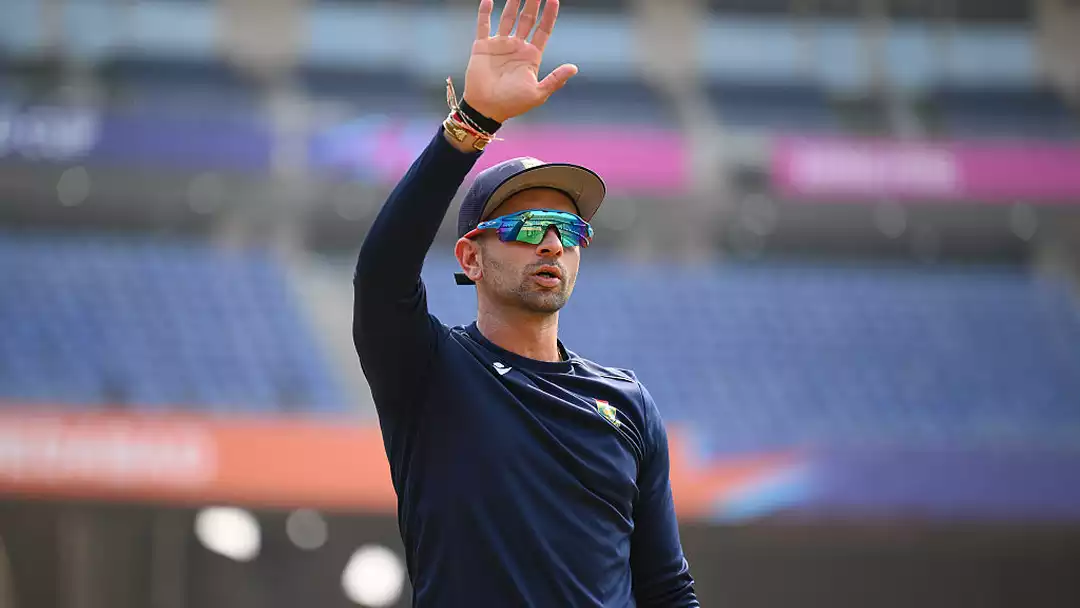
Keshav Maharaj will captain a youthful 15-member South African squad for the upcoming five-match T20I series against New Zealand national cricket team, scheduled from March 15 to 25. The squad, unveiled by Cricket South Africa on February 20, reflects a bold transitional phase, featuring five uncapped players and notably excluding those committed to the IPL.
The tour comes immediately after the ICC Men’s T20 World Cup 2026, prompting selectors to rest several regulars and instead test the depth of South Africa’s white-ball talent pool. For Maharaj, it is both a leadership responsibility and a strategic opportunity to shape the next wave of Proteas cricketers in challenging overseas conditions.
Fresh Faces Signal New Direction
Among the most eye-catching inclusions are Connor Esterhuizen, Dian Forrester, and Jordan Hermann — three batters rewarded for consistent domestic T20 performances. Their selection underlines a shift toward aggressive, modern T20 batting templates built around intent and adaptability.
Allrounder Eathan Bosch also earns his call-up, offering seam-bowling depth and lower-order hitting capability. However, the most exciting prospect may well be 19-year-old fast bowler Nqobani Mokoena. The teenage quick enjoyed a breakthrough campaign in the SA20, claiming 13 wickets in 10 matches at an economy rate of 9.62 for the Paarl Royals. His ability to generate pace and strike at key moments has fast-tracked him into the national reckoning.
Head coach Shukri Conrad was unequivocal in his praise of Mokoena’s potential, describing him as an exciting young fast bowler capable of making an immediate impact at the international level. The New Zealand tour, Conrad believes, will provide invaluable exposure to high-pressure environments.
While the squad leans heavily toward emerging talent, experience has not been overlooked. Maharaj is joined by fellow left-arm spinner George Linde and Jason Smith as the only members from South Africa’s T20 World Cup squad retained for the series.
Fast bowler Gerald Coetzee returns to the T20I setup for the first time since featuring against Namibia in October 2025, adding firepower to the pace attack. Meanwhile, Tony de Zorzi makes a comeback after recovering from a right hamstring injury. His presence strengthens the top order and offers stability to a relatively inexperienced batting unit.
Maharaj’s leadership credentials are well established. Beyond his international captaincy stints, he has guided two teams to SA20 finals, demonstrating tactical acumen and composure under pressure. His calm demeanor is expected to be critical as the young squad navigates New Zealand’s seam-friendly conditions.
Unique Double-Header Format
The five-match series will be staged as double-headers, with the South Africa Women playing in the afternoon before the men’s fixtures in the evening. This marks the first time the senior national sides will compete together in a bilateral double-header format — a progressive step aimed at elevating the women’s game while enhancing spectator engagement.
Matches will begin at the Bay Oval in Mount Maunganui, before moving to Hamilton, Auckland, Wellington’s Sky Stadium, and concluding in Christchurch. Each venue presents distinct tactical challenges, from swing-friendly surfaces to grounds demanding adaptable bowling strategies.
ALSO READ-Zimbabwe Thrive in Colombo Noise, Eye Bigger Stage Ahead
Opportunity Beyond the World Cup
Conrad emphasized that the timing of the tour creates a rare opening for fringe players to integrate into the international structure. With several World Cup regulars returning home post-tournament, the series functions as both a competitive contest and a developmental platform.
For South Africa, depth building has become a strategic priority. Modern T20 cricket demands a broad talent base capable of rotating through congested international calendars. Tours like this are designed to test not only technical ability but also mental resilience, adaptability, and tactical awareness.
The batting unit, in particular, carries intrigue. De Zorzi brings composure at the top, while Esterhuizen, Forrester, and Hermann are known for proactive stroke play. New Zealand’s conditions will test their shot selection, particularly against swing and short-ball tactics traditionally employed by the hosts.
Selecting five uncapped players is a calculated risk, but one aligned with long-term planning. The absence of IPL-bound stars ensures that emerging cricketers gain meaningful international exposure rather than peripheral roles. It also allows the coaching staff to evaluate combinations ahead of future ICC tournaments.
Maharaj’s spin leadership will be pivotal, especially in middle overs where control and wicket-taking must intersect. The seam unit, led by Coetzee and supported by Mokoena and Bosch, offers pace variety — a necessary ingredient against New Zealand’s aggressive top order.
The broader narrative extends beyond immediate results. This tour represents a transition phase — blending youth, recovery comebacks, and experienced heads under a steady captain. Success will not solely be measured by the scoreline but by how convincingly these players adapt to international intensity.
Squad Overview
South Africa’s T20I squad for the New Zealand tour: Keshav Maharaj (c), Ottneil Baartman, Eathan Bosch, Gerald Coetzee, Tony de Zorzi, Connor Esterhuizen, Dian Forrester, Jordan Hermann, Rubin Hermann, George Linde, Nqobani Mokoena, Andile Simelane, Lutho Sipamla, Prenelan Subrayen, and Jason Smith.