

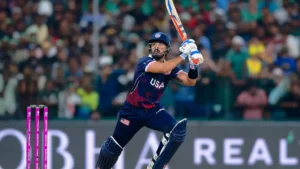
As the T20 World Cup unfolds with its usual drama and unpredictability, one voice from the United States camp has risen above the noise with a powerful message about the future of global cricket. USA batter Shayan Jahangir has urged the International Cricket Council (ICC) to increase funding and support for Associate nations, arguing that greater investment would elevate the quality of competition and help emerging teams consistently challenge the sport’s traditional powerhouses.
Speaking ahead of USA’s fixture against the Netherlands in Chennai, Jahangir did not mince words. For him, the issue is not about potential — it is about opportunity.
Associate Teams Deserve More Backing
Jahangir believes that Associate nations are proving their worth on the biggest stage, yet they continue to operate with limited financial and infrastructural support. According to him, the “Associate” tag should not define a team’s ability or ambition.
Throughout this World Cup, several Associate teams have delivered spirited performances. Nepal pushed England to the brink. The USA nearly stunned India after reducing them to 75 for 6 before Suryakumar Yadav steadied the innings. These moments, Jahangir argues, show that the gap between top Full Member teams and Associate nations is narrowing — but consistent progress requires structured backing.
He emphasized that players from Associate sides often rely heavily on personal sacrifice and individual dedication rather than institutional support. Without adequate funding, teams struggle to build world-class training facilities, organize high-quality domestic competitions, or arrange competitive bilateral series before major tournaments.
“If the ICC nurtures us properly,” Jahangir suggested, “you will see more big games and more teams changing their tag from Associate to major cricketing nations.”
Preparation Is a Privilege, Not a Guarantee
One of Jahangir’s key concerns is preparation. Leading cricketing nations frequently engage in bilateral series ahead of global tournaments to fine-tune strategies and acclimatize to conditions. India hosted New Zealand before the event, while Australia toured Pakistan for a preparatory series prior to arriving in Sri Lanka.
Associate nations rarely enjoy that luxury.
Without sufficient funding, arranging competitive tours, accessing top-tier stadiums, or securing advanced sports science resources becomes difficult. Preparation, which is fundamental to success at the international level, becomes an uphill battle.
For Associate players, major tournaments often double as learning experiences because they lack exposure to consistent high-pressure matches. Jahangir believes that if these teams are given more financial backing and structured pathways, the global cricket ecosystem would benefit.
Talent Without Exposure
Jahangir also highlighted the untapped talent pool within Associate cricket. He referenced Nepal’s Dipendra Singh Airee, who famously scored a nine-ball half-century — one of the fastest in T20 history. Despite such remarkable feats, many players from emerging nations struggle to secure global recognition or regular franchise opportunities.
In the modern era, visibility often determines career progression. Players from established cricketing countries gain immediate media attention and commercial endorsements. In contrast, equally talented cricketers from Associate nations fight for limited exposure.
Jahangir believes this imbalance can be corrected with strategic ICC intervention — through expanded tournaments, stronger developmental programs, and improved financial allocation. Increased visibility would not only elevate players but also inspire grassroots participation in non-traditional cricketing regions.
Cricket’s Rise in the United States
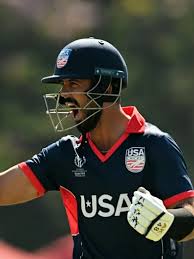
While Jahangir called for more international backing, he also acknowledged the significant strides cricket has made in the United States in recent years. The launch of Major League Cricket (MLC) has been instrumental in expanding awareness and participation.
According to Jahangir, MLC has sparked interest among young athletes across the country. More children are picking up bats and balls, and cricket is steadily carving out a niche in a traditionally baseball-dominated sporting landscape. Even native-born Americans, who previously had little exposure to the sport, are now aware that the USA fields an international cricket team.
Four or five years ago, cricket barely registered on the national sporting radar. Today, packed venues and growing youth academies signal meaningful progress. Jahangir credits both grassroots efforts and the dedication of USA players for maintaining belief despite limited exposure.
Representing the American flag, he said, brings immense pride — particularly for a team striving to redefine perceptions about cricket in the country.
A Personal Journey Comes Full Circle
Jahangir’s story adds emotional weight to his message. Born in Pakistan, he represented Pakistan at the Under-19 level before eventually making his way into the USA setup. During this World Cup, he had the unique experience of facing his country of birth on cricket’s biggest stage.
Reflecting on that moment, Jahangir described it as “full circle.” He admitted that growing up, he had always dreamed of playing for Pakistan. Yet life, as he put it, unfolds in unexpected ways.
Over the past decade, the decisions he made — moving countries, adapting to new systems, embracing fresh challenges — have culminated in representing the United States at a global tournament. For him, wearing the USA jersey is both a professional achievement and a personal milestone.
Although results have not always gone their way, Jahangir remains optimistic. He believes the squad possesses the talent and resilience needed to produce stronger performances in upcoming matches.
ALSO READ- Paul Stirling T20 World Cup campaign in trouble
The Bigger Picture for Global Cricket
Jahangir’s appeal to the ICC is not merely a complaint; it is a strategic argument for the sport’s long-term health. Cricket’s growth depends on expanding competitive depth beyond its traditional strongholds. When Associate nations challenge established giants, tournaments become more compelling, audiences broaden, and commercial interest increases.
A more balanced funding structure could accelerate this evolution. Investment in infrastructure, youth programs, coaching networks, and international exposure would transform promising teams into consistent contenders.
The 31-year-old batter is clear: Associate nations are already proving they belong. What they need now is structured support to sustain and amplify that progress.
As the USA prepares for its next challenge in the T20 World Cup, Jahangir’s words resonate beyond a single tournament. They reflect a broader shift in global cricket — one where emerging nations are no longer content with participation alone.
They want parity. They want opportunity. And above all, they want the chance to turn potential into lasting impact on the world stage.