

India is set for an intense and high-profile 2026–27 home cricket season, featuring multiple bilateral series and culminating in the prestigious Border-Gavaskar Trophy against Australia national cricket team. With matches scheduled across iconic venues like Nagpur, Chennai, Guwahati, Ranchi, and Ahmedabad, the season promises a mix of competitive cricket and logistical challenges.
The schedule includes tours from West Indies cricket team, Sri Lanka national cricket team, and Zimbabwe national cricket team, making it one of the busiest home seasons in recent years.
Four Bilateral Series Before the Big Finale
India will host four different teams across formats, beginning with West Indies in late September 2026. The Caribbean side will play three ODIs followed by five T20Is, with matches spread across cities like Thiruvananthapuram, Lucknow, and Bengaluru.
This will be followed by Sri Lanka’s tour in December, featuring three ODIs and three T20Is. The ODI leg begins in Delhi on December 13, followed by matches in Bengaluru and Ahmedabad.
Zimbabwe’s tour in January 2027 holds historical significance—it marks their first bilateral series in India since 2002. The three-match ODI series will be played in Kolkata, Hyderabad, and Mumbai.
Border-Gavaskar Trophy Takes Center Stage
The highlight of the season is undoubtedly the five-match Test series against Australia, starting January 21 and concluding March 3. This edition of the Border-Gavaskar Trophy will be played across five venues:
- Nagpur (Jan 21–25)
- Chennai (Jan 29–Feb 2)
- Guwahati (Feb 11–15)
- Ranchi (Feb 19–23)
- Ahmedabad (Feb 27–Mar 3)
This series is expected to draw massive attention, given the intense rivalry between India and Australia in Test cricket.
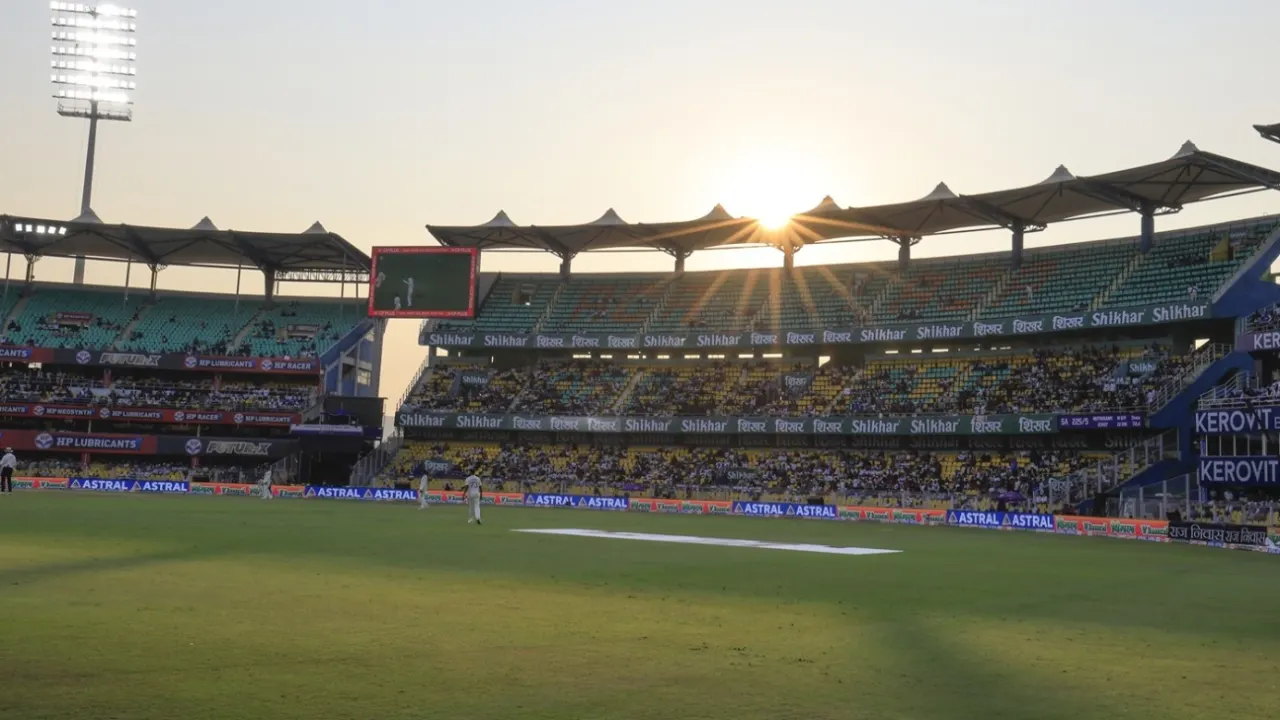
Guwahati’s inclusion is particularly notable. After hosting its first-ever Test in November 2025, the city is now set to host a Test match in consecutive seasons—highlighting its growing importance as an international venue.
Bengaluru Returns After Tragic Incident
One of the most significant developments this season is the return of international cricket to Bengaluru. The city had not hosted any matches since a tragic stampede outside M. Chinnaswamy Stadium last June, which resulted in the loss of 11 lives.
Bengaluru will now host two matches:
- The fifth T20I against West Indies on October 17
- The second ODI against Sri Lanka on December 16
This marks an important step in restoring normalcy and confidence in hosting large-scale sporting events in the city.
Multiple Venues Hosting Two Matches
Several cities will play a dual role during the season by hosting more than one international fixture:
- Guwahati: ODI vs West Indies and Test vs Australia
- Hyderabad: T20I vs West Indies and ODI vs Zimbabwe
- Ranchi: T20I vs West Indies and Test vs Australia
- Ahmedabad: ODI vs Sri Lanka and Test vs Australia
- Bengaluru: T20I vs West Indies and ODI vs Sri Lanka
This distribution ensures wider regional engagement while also testing the logistical preparedness of multiple venues.
Air Pollution Concerns in Delhi Fixture
The scheduling of the first ODI against Sri Lanka in Delhi has raised some concerns. The city is known to experience severe air pollution during the winter months, especially around December.
This is not the first time such concerns have surfaced. During a 2017 India-Sri Lanka Test in Delhi, players faced breathing difficulties and nausea due to poor air quality. More recently, the BCCI had to reschedule matches to avoid peak pollution periods.
While the December 13 fixture falls slightly before the worst pollution phase, it remains a point of attention for players, officials, and organizers.
Strategic Scheduling and Venue Rotation
The 2026–27 home season reflects a strategic approach by the BCCI in balancing workload, venue rotation, and audience reach. By spreading matches across multiple cities, the board ensures:
- Broader fan engagement
- Better infrastructure utilization
- Reduced scheduling pressure on individual venues
Additionally, the inclusion of emerging venues like Guwahati alongside traditional centers like Chennai and Mumbai highlights a shift toward expanding cricket’s geographic footprint in India.
ALSO READ –KKR Sign Navdeep Saini as Harshit Rana Replacement Ahead of IPL 2026
Complete Fixture Overview
West Indies Tour (Sept–Oct 2026)
- 3 ODIs: Thiruvananthapuram, Guwahati, New Chandigarh
- 5 T20Is: Lucknow, Ranchi, Indore, Hyderabad, Bengaluru
Sri Lanka Tour (Dec 2026)
- 3 ODIs: Delhi, Bengaluru, Ahmedabad
- 3 T20Is: Rajkot, Cuttack, Pune
Zimbabwe Tour (Jan 2027)
- 3 ODIs: Kolkata, Hyderabad, Mumbai
Australia Tour (Jan–Mar 2027)
- 5 Tests: Nagpur, Chennai, Guwahati, Ranchi, Ahmedabad
India’s 2026–27 home season is a comprehensive showcase of international cricket, combining high-stakes contests with logistical complexity. From the return of cricket in Bengaluru to the growing prominence of Guwahati, and from Zimbabwe’s long-awaited tour to the blockbuster Border-Gavaskar Trophy, the calendar offers something for every cricket fan.
As the season unfolds, all eyes will be on how teams adapt to different conditions, how venues manage the demands, and ultimately, how India performs in one of its most packed home schedules in recent times.