

India and West Indies have both been penalised for maintaining slow over-rates during the third and final ODI of their recently completed series in Mullanpur. The disciplinary action comes after both teams failed to complete their allotted overs within the stipulated time during a high-scoring contest.
India have been fined 20 per cent of their match fees, while West Indies have received a comparatively smaller penalty of 10 per cent.
The penalties were imposed after the match officials calculated the number of overs each side had fallen short by, taking all applicable time allowances into account.
India Fell Four Overs Short
India were found to have bowled four overs fewer than the required rate by the time West Indies successfully completed their chase.
The visitors were set a challenging target of 352 runs, but managed to reach the required total in just 48.2 overs. Despite the match ending before India’s full 50-over quota was completed, the home side was still found to be four overs behind the required over-rate.
Under the International Cricket Council’s regulations, teams are expected to maintain a specific rate throughout an ODI innings. Falling behind that rate can result in financial penalties for players and support staff.
India’s 20 per cent fine reflects the four-over shortfall.
West Indies Penalised for Two Overs
West Indies were also penalised despite bowling their complete quota of 50 overs.
After the permitted time allowances were taken into consideration, the visitors were found to have been two overs behind schedule. As a result, they were fined 10 per cent of their match fees.
The difference in penalties is directly linked to the number of overs each team was deemed to have fallen short.
The sanctions were handed down by match referee Prakash Bhatt under Article 2.22 of the ICC Code of Conduct for Players and Player Support Personnel.
The regulation states that players are fined five per cent of their match fee for every over their team fails to complete within the required time.
Therefore, India’s four-over shortfall resulted in a 20 per cent penalty, while West Indies’ two-over shortfall resulted in a 10 per cent fine.
Captains Accept Charges
The charges were raised by the match officials following the conclusion of the third ODI.
On-field umpires Jayaraman Madanagopal and Sam Nogajski, along with third umpire Sharfuddoula and fourth umpire Virender Sharma, were involved in the process.
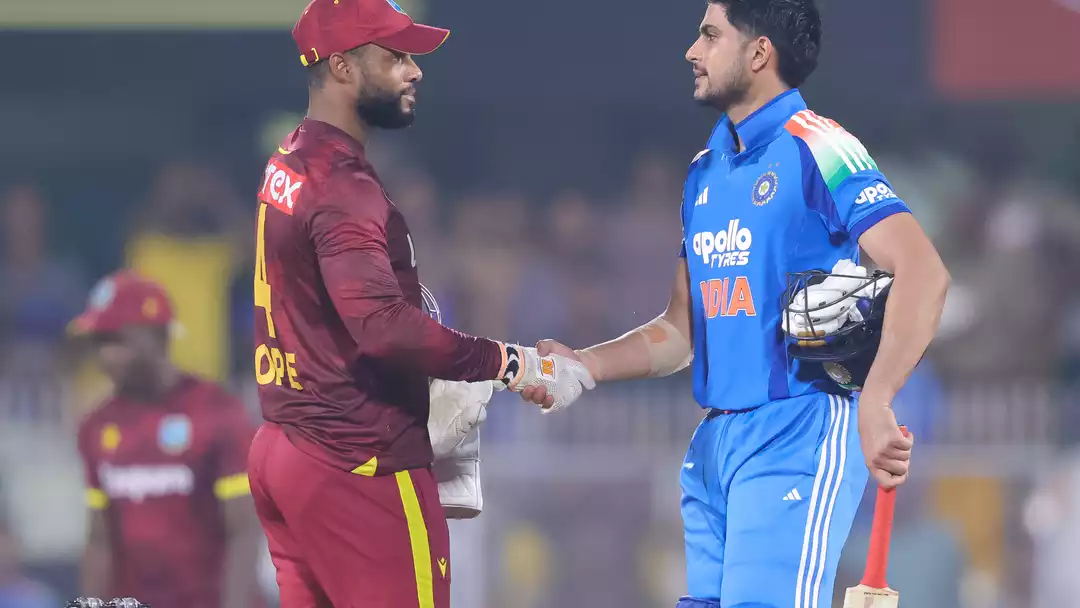
India captain Shubman Gill and West Indies captain Shai Hope accepted the sanctions on behalf of their respective teams.
Because both captains accepted the charges, there was no requirement for a formal disciplinary hearing.
The matter can therefore be considered closed, with both teams having accepted the penalties imposed under the ICC’s code.
ALSO READ-Sri Lanka Drop Charith Asalanka
West Indies Receive Second Recent Penalty
For West Indies, the latest sanction is their second over-rate penalty in ODI cricket in the last three months.
They were previously fined five per cent following the final ODI against New Zealand in July.
The repeat offence highlights the importance of maintaining the required over-rate, particularly as teams face increasingly strict enforcement of playing-time regulations.
Slow over-rates have become a regular disciplinary issue in international cricket, with teams expected to manage their bowling changes, field settings and other delays carefully to ensure that matches remain on schedule.
India’s Previous Fine Came in 2025
India’s latest penalty is their first over-rate sanction in ODI cricket since December 2025.
Their previous case occurred during the ODI against South Africa in Raipur, when India were fined 10 per cent for falling short of the required over-rate.
The latest 20 per cent penalty is therefore a larger sanction than the one imposed in that match.
The penalty also comes immediately after a memorable ODI series against West Indies, which featured high-scoring cricket and an aggressive chase in the final match.
A High-Scoring Third ODI
The third ODI in Mullanpur was particularly notable because of the run-scoring.
India posted a formidable target of 352, putting the West Indies batting lineup under significant pressure. However, the visitors produced an impressive chase and reached the target in 48.2 overs.
The fact that West Indies completed the chase with more than an over remaining demonstrated the quality of their batting performance.
For India, however, the result meant that they not only lost the match but also ended up with a four-over over-rate shortfall.
The combination of a lengthy innings and the demands of managing a high-pressure ODI can sometimes make it difficult for teams to maintain the required pace. Nevertheless, the ICC regulations leave little room for repeated delays.
Focus Now Shifts to T20Is
The disciplinary matter comes just before the two teams begin their next assignment against each other.
India and West Indies will now turn their attention to a five-match T20I series, with the opening match scheduled to take place in Lucknow on October 6.
The shortest format brings a different set of tactical challenges, and teams have much less time to recover from mistakes. Over-rate regulations also remain important in T20 cricket, where matches are expected to be completed within a tightly controlled time frame.
India will be looking to carry momentum into the T20I series, while West Indies will hope their strong performance in the final ODI provides confidence going forward.
What the Penalties Mean
The latest sanctions serve as another reminder that international teams must keep a close eye on match timings.
The ICC’s over-rate regulations are designed to prevent excessive delays and ensure that matches are completed within the expected window. The five-per-cent-per-over structure also means that even a relatively small delay can quickly result in a significant financial penalty.
For India, the four-over shortfall has resulted in a 20 per cent fine, while West Indies have been handed a 10 per cent penalty for their two-over deficit.
Both teams have accepted the charges, meaning there will be no further disciplinary proceedings related to the incident.
With the ODI series now finished, the focus will quickly shift to the T20I format. India and West Indies will meet again in Lucknow on October 6, beginning a five-match series that will give both sides an opportunity to put the over-rate controversy behind them and focus entirely on cricket.