

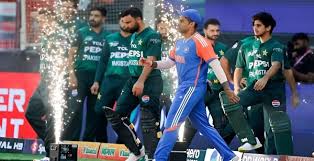
The build-up to an India-Pakistan clash is never quiet. It hums, it simmers, it carries history in every statistic and emotion in every preview line. Sunday’s T20 World Cup encounter at the R. Premadasa Stadium is no different. It arrives layered with recent dominance, subtle shifts in strategy, and a psychological chess match that extends well beyond the boundary rope.
Asia Cup Sweep
On the surface, India’s 3-0 sweep of Pakistan in the Asia Cup suggests clear superiority. But look closer, and the margins tell a more nuanced story. Pakistan, led by Salman Ali Agha, improved steadily with each outing. The defeats narrowed from seven wickets to six, and finally to five — a result that barely reflected how tight the final contest became. It took an extraordinary effort from Tilak Varma to stall what appeared to be a slow but certain Pakistani resurgence.
Momentum in tournament cricket is rarely linear. While India walked away with the trophies and headlines, Pakistan quietly gathered lessons. They recalibrated combinations, reassessed tactics, and introduced fresh elements to their squad. This time around, they do not arrive as the same team that faltered in Dubai last September.

A Tactical Shift: From Pace to Spin
Historically, India versus Pakistan has been framed as a classic duel — India’s powerful batting line-up against Pakistan’s fiery fast bowling. Think early swing, hostile pace, and high-pressure chases. But that familiar template seems to be evolving.
Pakistan’s recent approach has leaned heavily into spin. In their last game, they fielded five spin options — Saim Ayub, Abrar Ahmed, Mohammad Nawaz, Shadab Khan and Usman Tariq — alongside just one frontline pacer in Shaheen Afridi. It is a bold reimagining of their identity.
Usman Tariq, in particular, has emerged as a wildcard. The pause-and-deliver mystery spinner is being widely labeled as Pakistan’s trump card. His variations, subtle changes in pace, and ability to disrupt rhythm could prove critical against India’s stroke-makers. In a format where unpredictability often trumps raw speed, Pakistan appear ready to gamble.India, however, are not caught off guard. Captain Suryakumar Yadav acknowledged Pakistan’s recent improvement but remained composed. Respectful without conceding psychological advantage — that is the balancing act he has mastered in the build-up.
ALSO READ –Salman Agha Rejects ‘Colombo Advantage’ Talk Ahead of India vs Pakistan T20 World Cup Clash
Head-to-Head
Numbers rarely stay out of India-Pakistan conversations. India’s 13-3 overall T20 World Cup record and 7-1 dominance in World Cups loom large. Add to that eight consecutive completed wins across formats, and the statistical edge becomes undeniable.Yet Suryakumar has previously downplayed the idea of rivalry when head-to-head records are so skewed. If two teams split results evenly, he suggests, that’s a rivalry. Otherwise, it’s just cricket.
But psychological dynamics are rarely that simple. For Pakistan, defeating India remains a symbolic breakthrough. For India, maintaining dominance carries its own pressure. Silence from Pakistan’s camp when questioned about the lopsided numbers speaks as loudly as any quote.History may not win matches, but it certainly shapes mindsets.
The Abhishek Factor
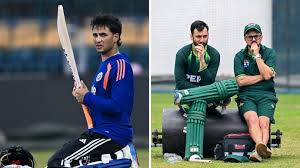
India’s only apparent Achilles’ heel in the Asia Cup was instability at the top of the order. With Abhishek Sharma expected to return, that vulnerability may have been addressed. His aggressive powerplay approach can tilt momentum within overs, not just innings.
Interestingly, Pakistan seem wary of him. Salman Agha publicly expressed hope that Abhishek would play — a remark that carried both respect and challenge. Suryakumar’s response was brief and confident: if he wants to play, he plays.
In India-Pakistan contests, heroes are minted overnight. Tilak Varma did it in the Asia Cup final. Abhishek could easily step into that spotlight. Whether he becomes the headline act or simply sets the tempo, his presence reshapes field placements and bowling plans.
Conditions
Another subplot centers on familiarity with Colombo. Pakistan have been based in the city for over two weeks, while India arrived just a day before the game. On paper, acclimatization favors Pakistan.
But both camps have downplayed the significance. Agha insists that being based in Colombo merely means they are used to the climate — not that it guarantees advantage. Suryakumar countered by pointing out India’s extensive experience on similar wickets back home and during bilateral tours in Sri Lanka.
There is also a twist: despite their longer stay, Pakistan will be playing at the R. Premadasa Stadium for the first time in this World Cup. In that sense, the venue is equally new to both sides.
Tactical Match-Ups to Watch
If Pakistan persist with a spin-heavy strategy, India’s middle order becomes pivotal. Players like Tilak Varma, Rinku Singh and Suryakumar himself are adept at manipulating slower bowlers. Their ability to rotate strike while maintaining a high scoring rate could neutralize Pakistan’s plan.
On the other hand, Shaheen Afridi’s new-ball spell remains Pakistan’s most potent weapon. Early breakthroughs could expose India’s middle order sooner than expected. Support from Faheem Ashraf, should he feature as a second pacer, will be crucial in balancing the attack.
For India, Jasprit Bumrah’s death-over precision and Arshdeep Singh’s left-arm variation provide stability. Spin options like Varun Chakaravarthy and Axar Patel add control through the middle overs, and the possible inclusion of Kuldeep Yadav could further enhance that control.
All technical analysis fades slightly when India and Pakistan meet. The “P-factor” — pressure — hovers over every delivery. It is not just about skill but composure. Nerves, expectations, and the knowledge of representing millions amplify each moment.
Suryakumar admitted there would be butterflies. Without nerves, he suggested, the occasion loses its edge. Salman Agha framed it differently, acknowledging the added responsibility of captaining a side that carries the hopes of over 250 million people.
It is a burden neither captain can escape. It is also what makes this fixture unique.
What to Expect on Sunday
Rain may hover over Colombo, but the venue’s efficient drainage system ensures minimal delays once showers pass. Historically, chasing has proven advantageous in recent India-Pakistan T20Is, with 10 of the last 11 games since 2014 won by the team batting second.
High-scoring or low-scoring, spin-dominated or pace-driven, the contest promises intensity. The margins will be thin. The moments decisive.
Ultimately, India-Pakistan matches resist prediction. Records, form, and strategies all matter — until they don’t. What remains is execution under extraordinary pressure.
Sunday’s clash in Colombo is officially just another group-stage fixture. Emotionally, historically, and culturally, it is anything but ordinary.