

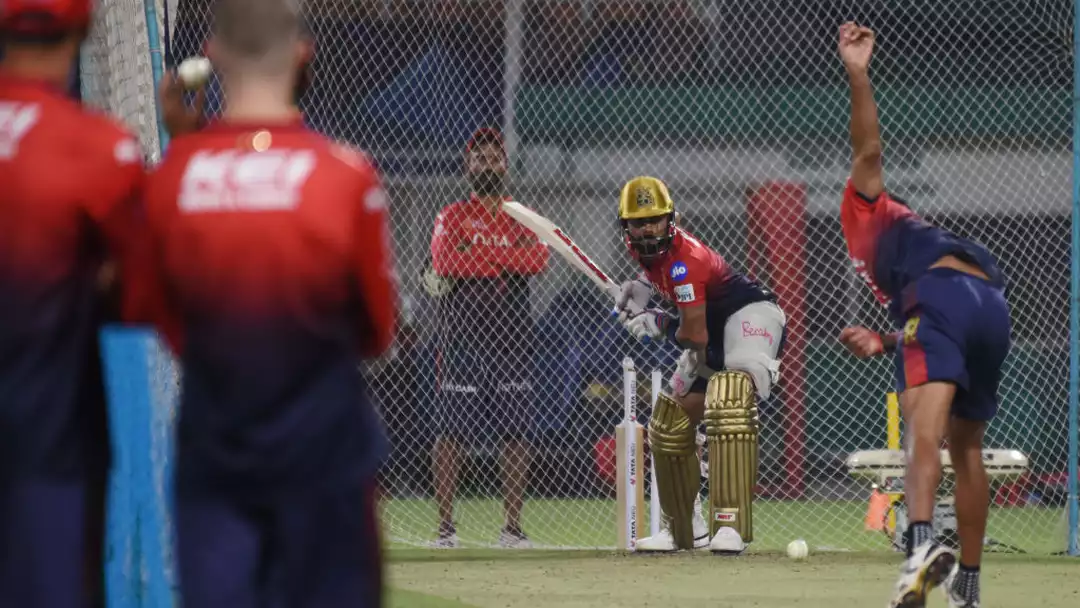
he Board of Control for Cricket in India (BCCI) has introduced a detailed set of practice-session guidelines for franchises ahead of the upcoming season of the Indian Premier League (IPL). The five-page document outlines strict protocols regarding the use of practice nets, practice matches, and pitch preparation to ensure fair playing conditions for all teams.
One of the key directives states that teams will not be allowed to train on practice nets that were previously used by their opponents. Instead, fresh nets must be prepared for each team during their designated practice sessions. The move is aimed at maintaining uniform conditions and avoiding any potential advantage that could arise from using a pitch already worn by another side.
According to the guidelines, if two teams have practice sessions scheduled back-to-back or simultaneously, the first team will not be allowed to use the other team’s practice nets. This rule also applies to activities such as throwdowns or range-hitting drills. Additionally, if a team finishes its training session early, the opposing team cannot use the same range-hitting wicket.
Rules for Practice Matches
The BCCI has also set clear conditions for teams planning to organize practice matches before the start of the season. Franchises will be allowed to play a maximum of two practice games, but they must obtain prior approval from the board. These matches must be played on one of the side wickets rather than the main pitch.
Furthermore, the board has specified that practice matches conducted under floodlights must not exceed three and a half hours. This rule ensures that practice games remain controlled and do not interfere with pitch preparation or match-day logistics.
Another crucial restriction concerns the use of the main square. The BCCI has strictly prohibited teams from holding practice sessions or matches on the main square in the four days leading up to their first home fixture of the season. The objective is to protect the match pitches and ensure they are in optimal condition for official games.
If a franchise requires practice facilities during this restricted period, the responsibility falls on the state association to provide an alternative ground. Importantly, this alternative venue must be made available to the franchise free of charge.
Allocation of Practice Nets
Ahead of the opening matches of the tournament, teams will be given access to designated practice facilities starting March 16. Each team will be allotted two practice nets in the practice area along with one net on the main square that can be used specifically for range-hitting drills.
Range hitting is an important part of modern T20 preparation, allowing batters to practice power hitting and simulate match scenarios. The BCCI guidelines state that a dedicated wicket will be prepared for each team at the extreme edges of both sides of the main square. Teams can use these wickets for multiple activities such as range hitting, bowling run-throughs, throwdowns, or general skill drills.
Preference for Home Teams
The guidelines also address scheduling preferences between home and visiting teams. While the home franchise will be given priority in selecting its preferred practice session, the visiting team’s schedule will also be taken into consideration.
This is particularly relevant when the visiting team has played a match the previous day or has extensive travel commitments. In such cases, the BCCI expects franchises to accommodate reasonable requests from the away side to maintain fairness and ensure proper preparation time.
Resolving Scheduling Conflicts
In situations where both teams request the same practice slot, the BCCI will first encourage the team managers to resolve the matter mutually. Options may include adjusting session timings or sharing the practice session.
However, if the two teams fail to reach an agreement, the BCCI will step in to determine the final schedule. In such cases, the board may divide the available practice window into two equal sessions—typically two hours each—to ensure that both teams receive comparable training opportunities.
For example, one team could train from 6:00 PM to 8:00 PM, while the other could take the ground from 8:00 PM to 10:00 PM. This system ensures that both teams experience similar playing conditions while having exclusive access to the ground during their allotted time.
ALSO READ – Bangladesh Move Litton Das to Middle Order Ahead of Pakistan ODI Series
Logistical Responsibilities
The responsibility for organizing practice arrangements during the regular season lies with the home franchise. This includes coordinating catering, training facilities, medical services, and security arrangements in consultation with the state association curator and the IPL venue manager.
However, visiting teams must arrange their own beverages during training sessions. For playoff matches, the BCCI itself will take charge of organizing the practice facilities and logistical requirements.
Safety Measures and Special Conditions
The guidelines also emphasize player safety. Practice nets must remain open towards the non-pavilion side to minimize the risk of injuries during training sessions. At venues such as Ahmedabad and Lucknow, range-hitting wickets may consist of either red or black soil depending on pitch preparation.
The home team will have the privilege of selecting its preferred range-hitting wicket during the first 90 minutes of the practice session.
With these comprehensive guidelines, the BCCI aims to standardize training facilities, ensure fairness between competing teams, and maintain the quality of playing surfaces throughout the IPL season.