

The controversy surrounding the Asia Cup trophy presentation has returned for a second consecutive year, with the Indian women’s cricket team declining to receive the trophy from Asian Cricket Council (ACC) president and Pakistan Cricket Board (PCB) chairman Mohsin Naqvi.
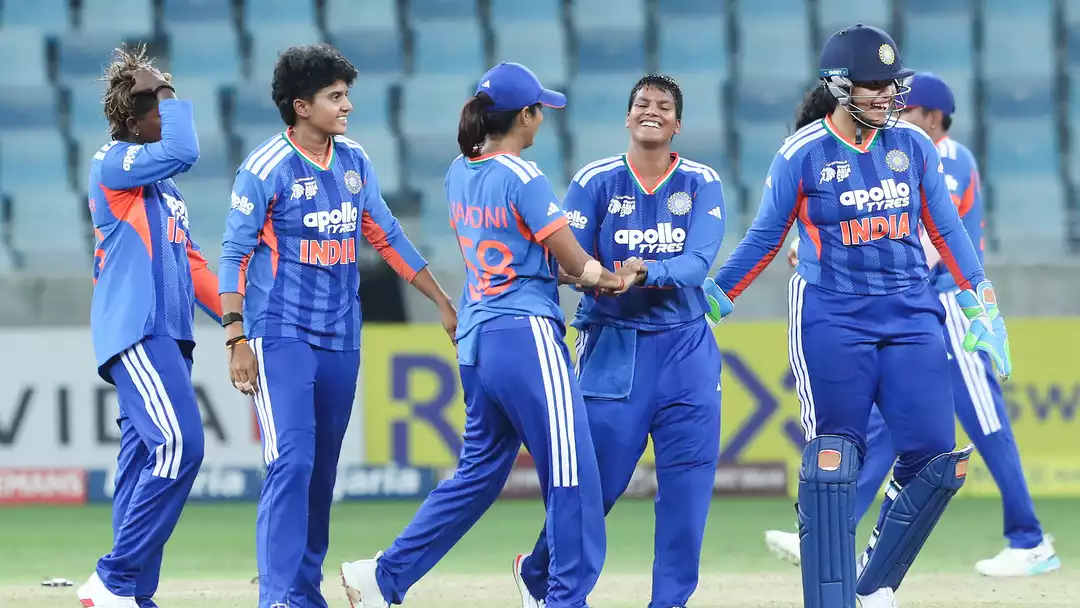
India defeated Sri Lanka by 72 runs in the Women’s Asia Cup final in Dubai on Sunday to secure a record-extending eighth title. However, the post-match presentation took an unusual turn as the Indian players did not take part in the trophy presentation involving Naqvi.
BCCI secretary Devajit Saikia has now publicly backed the team’s decision, explaining that the women’s side was following the same position adopted by the Indian men’s team after last year’s Asia Cup triumph.
The incident has once again brought cricket and India-Pakistan relations into focus, even though both countries continue to face each other in multinational competitions.
Devajit Saikia backs India women’s decision
Speaking after the final, Saikia said the decision taken by the Indian women’s team was consistent with the BCCI’s position following the deterioration in India-Pakistan relations after the Pahalgam terror attack in April 2025.
According to Saikia, India continues to participate in multinational tournaments because that remains the government’s policy. However, he made it clear that participation in a competition does not necessarily mean accepting every condition associated with the event.
Saikia said the BCCI continues to send its teams to play against every opponent in multinational competitions, but added that there are certain situations in which the Indian side can take a separate position.
The BCCI secretary specifically referred to Naqvi’s position as a senior Pakistani political and cricket administrator and said India could not accept the trophy from him.
His comments effectively confirmed that the women’s team’s decision was not an isolated incident but a continuation of the stance taken by the men’s team last year.
India follows the men’s team’s precedent
The trophy dispute is not new.
When the Indian men’s team won the Asia Cup last year, it also declined to receive the trophy from Naqvi. The decision came amid heightened tensions between India and Pakistan following the Pahalgam attack and India’s subsequent military response, Operation Sindoor.
The political backdrop has continued to influence cricketing relations between the two countries.
Although India and Pakistan remain part of the same multinational tournaments, the traditional post-match handshake between the teams has also been absent in recent encounters.
The women’s team’s decision therefore represented continuity rather than a sudden change in policy.
Saikia said the players wanted to express solidarity with the men’s team and maintain the position that had already been established by the BCCI.
Also Read-IPL Franchises Wary of BBL Privatisation Despite Investment Interest
BCCI offered an alternative for the trophy presentation
According to the reporting surrounding the incident, India was willing to accept the trophy from another ACC official rather than Naqvi.
Khalid Al Zarooni, the ACC vice-president, was reportedly available as an alternative presenter. However, the situation could not be resolved because Naqvi did not step aside for the presentation.
As a result, the Indian players did not participate in the trophy presentation.
The presentation ceremony itself was delayed, while Sri Lanka’s players received their runners-up medals and cheque. The Indian side instead conducted its own celebrations away from the main presentation stage.
The unusual scenes meant that India celebrated another major tournament victory without the conventional moment of the captain lifting the trophy during the official presentation.
Saikia explains his meeting with Mohsin Naqvi
Another aspect of the incident that attracted attention was Saikia’s interaction with Naqvi during the final.
Both Saikia and BCCI vice-president Rajeev Shukla were present in the Royal Box during the match. Naqvi was also seen interacting with the Indian officials.
Saikia played down the significance of that meeting.
He explained that the Royal Box is a shared space where officials from different organisations naturally meet during matches. According to him, the interaction should not be interpreted as a change in the BCCI’s position.
Saikia said that meeting another official during a cricket match and accepting a trophy from that official were two completely different matters.
The BCCI secretary maintained that there was no contradiction between the interaction in the Royal Box and India’s decision over the trophy presentation.
‘No regrets’ over the trophy controversy
Saikia also insisted that the BCCI had no regrets about how the situation unfolded.
He said the primary objective for the Indian team was to win the final, rather than focus on who would eventually hand over the trophy.
That objective was achieved emphatically.
India produced a dominant performance against Sri Lanka, winning the final by 72 runs and completing an unbeaten campaign. The victory extended India’s record in the Women’s Asia Cup and underlined the team’s dominance in the regional tournament.
Saikia therefore argued that the trophy presentation issue should not overshadow the team’s performance on the field.
For the BCCI, winning the title remained the central priority.
India dominate Sri Lanka to win eighth Asia Cup title
The controversy came after an emphatic performance from Harmanpreet Kaur’s side.
India posted 183 runs in the final before restricting Sri Lanka to 111, completing a 72-run victory. Shafali Verma and Smriti Mandhana provided the foundation with a century-plus opening partnership, while India’s bowling attack finished the job during the second innings.
India’s eighth Women’s Asia Cup title further strengthened its position as the dominant force in the competition.
The tournament also provided several positives ahead of the Asian Games, where India will defend its women’s cricket gold medal.
The BCCI had already announced the squad for the Aichi-Nagoya Asian Games, with Harmanpreet Kaur leading the side and Smriti Mandhana named vice-captain.
Asian Games now the next challenge
With the Asia Cup campaign completed, India’s attention will now shift towards the Asian Games in Japan.
The women’s T20 competition at the Aichi-Nagoya Asian Games is scheduled to begin on September 17. India, as the defending champions, will enter the tournament with expectations of another strong campaign.
India are scheduled to face hosts Japan in the quarterfinal stage on September 18.
The Asia Cup triumph will provide considerable momentum for Harmanpreet Kaur and her team heading into the multi-sport event.
For the players, the focus is expected to remain on cricket after an emotionally charged Asia Cup final.
India-Pakistan cricket relationship remains complicated
The latest trophy episode once again demonstrates the complicated relationship between India and Pakistan in international cricket.
The two teams continue to meet in multinational tournaments despite the political tensions between the two countries. However, interactions away from the actual competition have become increasingly sensitive.
The trophy incidents involving the men’s and women’s teams have added another layer to that relationship.
From the BCCI’s perspective, participation in multinational tournaments remains separate from other diplomatic considerations. India continues to compete when required by the international tournament structure, but the board has also made it clear that participation does not mean ignoring its broader position.
That distinction is likely to remain important whenever India and Pakistan are drawn together in future competitions.
BCCI stance unlikely to change soon
Saikia’s comments suggest that the BCCI currently sees no reason to alter the position adopted by the men’s team last year.
The women’s team’s decision was significant because it showed that the stance was not restricted to one particular squad or one particular tournament.
At the same time, the BCCI appears keen to avoid allowing the controversy to dominate India’s sporting achievements.