

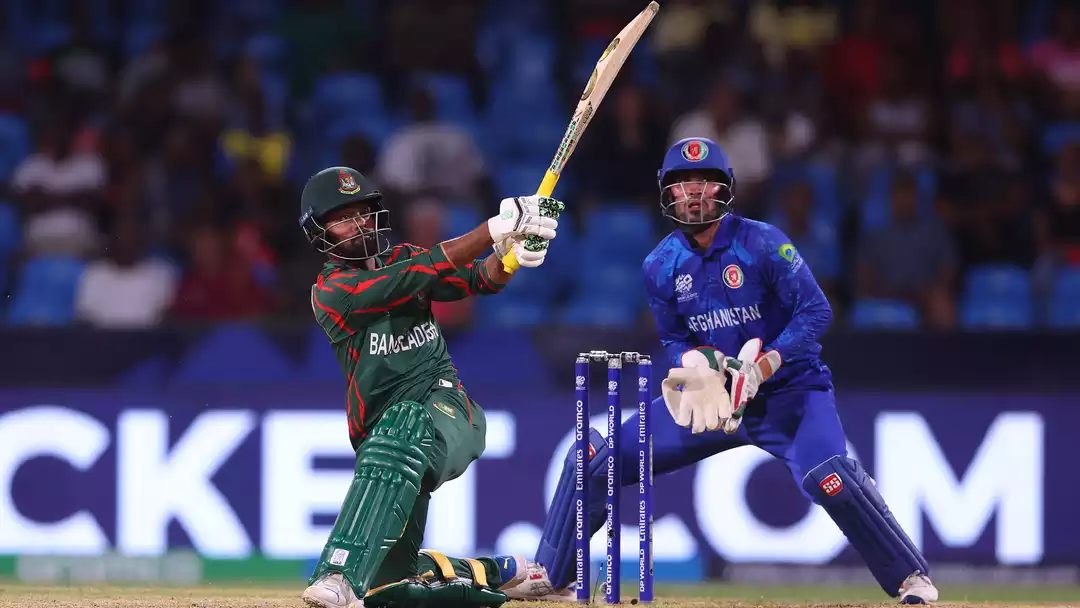
Afghanistan are set to host Zimbabwe and Bangladesh in a three-team ODI series in the United Arab Emirates in October, with the tournament forming part of an extensive international cricket programme involving all three teams.
The ODI tri-series will be played from October 17 to 23 and will be followed by a three-match T20I series between Afghanistan and Zimbabwe, as well as two Test matches between the sides. The packed schedule will give Zimbabwe an opportunity to compete across all three formats while Afghanistan continue to build a busy home programme in the UAE.
The tri-series will begin on October 17, when Zimbabwe take on Bangladesh. Afghanistan will enter the competition two days later, facing Zimbabwe on October 19. The hosts will then play Bangladesh on October 21 before the tournament concludes with the final on October 23.
Afghanistan prepare for busy UAE schedule
The ODI tournament is only the beginning of a demanding stretch of international cricket in the UAE. Afghanistan and Zimbabwe will subsequently meet in three T20Is, followed by a two-match Test series.
The T20I fixtures are scheduled for October 27, October 29 and November 1. The shortest-format series will give both teams an opportunity to fine-tune their squads before switching gears for the longer format.
The first Test is scheduled to begin on November 5, while the second Test will start on November 13. With the Test series coming immediately after the T20Is, players and support staff will have to manage a significant change in preparation, workload and playing conditions.
For Afghanistan, the programme provides valuable exposure across formats on UAE pitches. The country has frequently used the UAE as a home venue because of the logistical and scheduling challenges associated with hosting international cricket in Afghanistan.
Zimbabwe begin with Bangladesh challenge
Zimbabwe will open their UAE campaign against Bangladesh on October 17 before taking on Afghanistan two days later.
The tri-series gives Zimbabwe three guaranteed opportunities to test themselves against quality opposition, with the possibility of a fourth match if they reach the final. The tournament will also serve as preparation for the bilateral T20I and Test assignments against Afghanistan.
Zimbabwe Cricket Managing Director Givemore Makoni highlighted the importance of the tour, particularly because of the opportunity to play international cricket across all three formats.
He described the programme as an important assignment for Zimbabwe and stressed the value of facing strong opposition during a period when the team is seeking greater exposure in Test cricket as well as the white-ball formats.
The Test matches are particularly significant for Zimbabwe, who have repeatedly sought more opportunities to play the longest format. A multi-format tour such as this one provides the squad with a chance to assess players across different conditions and match situations.
Also Read-Gull Feroza Fined for Dissent in Asia Cup
Bangladesh add further competition
Bangladesh will also have a demanding schedule surrounding the UAE tri-series.
Before the ODI tournament begins, Afghanistan and Bangladesh are scheduled to play a one-off Test from October 9 to 13. That match will provide both sides with an early opportunity to assess their red-ball combinations before Bangladesh switches to the ODI format for the tri-series.
Bangladesh will then begin their ODI campaign against Zimbabwe on October 17. Their second match will come against Afghanistan on October 21.
The back-to-back assignments mean Bangladesh will have to adapt quickly between formats. The one-off Test will require a completely different preparation compared with the ODI matches, particularly in terms of squad balance, bowling workloads and batting approach.
For Afghanistan, the Test against Bangladesh will also be an important part of their preparation before the three-team ODI tournament gets underway.
Full UAE tri-series schedule
The ODI tri-series will consist of four matches, including the final.
The tournament starts with Zimbabwe against Bangladesh on October 17. Afghanistan then face Zimbabwe on October 19, followed by Afghanistan’s meeting with Bangladesh on October 21.
The final will be played on October 23, bringing the ODI portion of the programme to a close.
The schedule gives each participating team an opportunity to play the other sides during the league phase, while the final will determine the overall winner of the tournament.
For Afghanistan, playing at home conditions in the UAE could provide an advantage, particularly for their spinners and players accustomed to the surfaces and climate in the region.
T20Is and Tests follow ODI tournament
Once the ODI tri-series is completed, Afghanistan and Zimbabwe will remain in the UAE for their bilateral white-ball and red-ball commitments.
The three-match T20I series will begin on October 27, only four days after the ODI final. The second T20I will take place on October 29, with the final game scheduled for November 1.
The quick turnaround will test squad depth, particularly for players involved in all three formats. Teams will have to carefully manage workloads while also ensuring that their best combinations are available for each format.
The focus will then shift towards Test cricket. The opening Test is scheduled to start on November 5, giving the teams only a short period to move from T20 cricket into the longest format.
The second and final Test will begin on November 13.
Makoni welcomes multi-format opportunity
Zimbabwe Cricket Managing Director Givemore Makoni welcomed the schedule and said the tour would provide Zimbabwe’s players with valuable high-level competition.
He also acknowledged the cooperation of the Afghanistan Cricket Board and Bangladesh Cricket Board in putting the programme together.
The opportunity to play across ODI, T20I and Test cricket is particularly important for Zimbabwe because regular multi-format assignments can help players develop greater adaptability.
The Test matches against Afghanistan will be especially useful for players looking to establish themselves in Zimbabwe’s red-ball setup. At the same time, the ODI tri-series offers an opportunity to compete against two international teams in a tournament environment.
Afghanistan Cricket Board backs busy programme
The Afghanistan Cricket Board has also welcomed the extensive schedule, pointing to the value of playing international cricket across multiple formats.
ACB Chief Executive Officer Naseeb Khan said matches against Bangladesh and Zimbabwe would provide Afghanistan’s players with important competitive opportunities.
The board also stressed its commitment to arranging regular international cricket for the national side while maintaining strong relationships with both Bangladesh Cricket Board and Zimbabwe Cricket.
For Afghanistan, the UAE programme represents another significant block of international cricket. The combination of a one-off Test against Bangladesh, an ODI tri-series and bilateral T20I and Test series against Zimbabwe will give the team opportunities to assess a large group of players.
A demanding period for all three teams
The October-November schedule promises plenty of cricket in the UAE, with Afghanistan, Bangladesh and Zimbabwe all involved in important assignments.
Zimbabwe will have the longest multi-format commitment, beginning with the ODI tri-series before moving into T20Is and Tests against Afghanistan. Bangladesh will have a Test followed by the ODI tournament, while Afghanistan will feature throughout the programme.
The schedule could also prove valuable for players competing for places in their respective international squads. With matches spread across all three formats, selectors will have a close look at players who can contribute consistently under different conditions.
The UAE’s familiar conditions should add another layer to the contest, particularly for spinners and batters capable of adapting to slower surfaces.
With the ODI tri-series beginning on October 17, followed by the T20Is and two Tests, Afghanistan, Zimbabwe and Bangladesh are set for a significant period of international cricket. The programme should provide competitive preparation, valuable match practice and an extended opportunity for each team to strengthen its multi-format setup.