

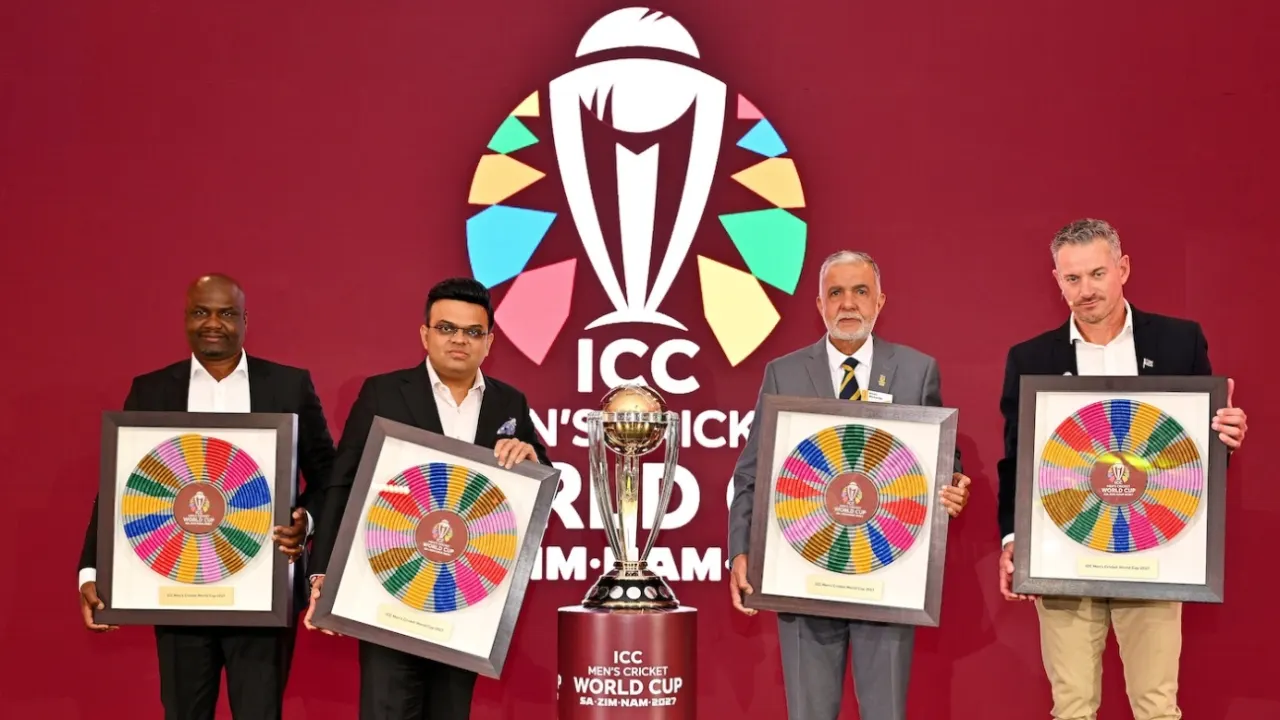
The 2027 ICC Men’s ODI World Cup is more than just another global tournament. For Africa, it represents growth, unity, cultural pride, and an opportunity to redefine its place in world cricket.
When South Africa hosted the ICC Men’s ODI World Cup in 2003, cricket on the continent looked very different. Makhaya Ntini was carrying the hopes of millions as one of South Africa’s pioneering Black cricketers, Temba Bavuma was a 12-year-old dreaming from the sidelines, and Kagiso Rabada was still discovering the sport.
Fast forward 24 years, and Africa is preparing to welcome the cricketing world once again—but this time, the story is far bigger than what happens on the field.
The 2027 ODI World Cup, jointly hosted by South Africa, Zimbabwe, and Namibia, is being positioned as a celebration of African cricket, culture, and unity. The tournament’s official slogan, “Come for the cricket, stay for the culture,” perfectly captures the vision behind what promises to be one of the most unique World Cups in the competition’s history.
A World Cup That Means More Than Cricket
Unlike previous editions, the 2027 World Cup is about showcasing an entire continent rather than simply organizing another ICC event.
At the official launch in Johannesburg, current stars, former players, administrators, and dignitaries gathered to present a vision that extends well beyond sixes, wickets, and trophies.
South Africa captain Temba Bavuma believes the tournament offers Africa an opportunity to present itself to the world in a completely different light.
He emphasized that the event is a chance to highlight the continent’s natural beauty, diverse cultures, and passionate sporting communities. According to Bavuma, the responsibility now lies with the host nations to deliver a memorable tournament that changes global perceptions of Africa.
For millions of cricket fans worldwide, this World Cup could become their first real introduction to the continent beyond television headlines.
From Minority Sport to People’s Game
Perhaps the biggest transformation since 2003 has been the evolution of cricket itself across southern Africa.
Two decades ago, cricket was largely viewed as a sport played by limited communities, particularly in South Africa and Zimbabwe. Today, the game reaches far more diverse audiences and continues to expand across different ethnic and social backgrounds.
Kagiso Rabada, currently one of the world’s premier fast bowlers, believes this wider participation is the biggest achievement African cricket has made over the years.
He points to the increasing diversity among players, supporters, and aspiring youngsters as evidence that cricket has become far more inclusive than ever before.
That growth is equally visible in Zimbabwe, where passionate supporters have become famous worldwide for their energetic chants, music, and unique match-day atmosphere.
Former Zimbabwe captain Hamilton Masakadza believes cricket in his country has finally begun reflecting the nation’s demographics, allowing the sport to move beyond survival and towards genuine growth.
South Africa’s Golden Opportunity
For South Africa, hosting another World Cup brings enormous excitement—but also familiar expectations.
The Proteas have consistently produced world-class teams yet continue searching for their first men’s ODI World Cup title.
Few understand that pressure better than Makhaya Ntini.
Having experienced the expectations surrounding the 2003 tournament firsthand, the former fast bowler hopes history does not repeat itself.
Rather than burdening the current team with discussions about past disappointments, Ntini believes the focus should remain on how far South African cricket has progressed over the past two decades.
He argues that constantly reviving old narratives only increases unnecessary pressure on players preparing for the biggest tournament of their careers.
Also Read-Ajinkya Rahane Retires from International Cricket
Rabada Ready for the Biggest Stage
If South Africa are to finally end their World Cup drought, Kagiso Rabada will almost certainly play a central role.
The experienced fast bowler has consistently delivered on major occasions throughout his career and appears genuinely excited about competing in front of home supporters.
For Rabada, there is no greater place to play cricket than South Africa.
With thousands expected to fill stadiums across the country, he believes hosting a World Cup at home will create an unforgettable atmosphere for both players and fans.
His leadership with the ball could ultimately determine how far the Proteas progress in the tournament.
Zimbabwe and Namibia Continue Their Rise
While South Africa commands global attention, Zimbabwe and Namibia also have compelling stories to tell.
Zimbabwe’s cricket revival has gathered momentum in recent years, with supporters earning worldwide admiration for their unmatched passion.
The country’s cricket administration sees the World Cup as validation of years spent rebuilding structures, developing talent, and reconnecting with local communities.
Meanwhile, Namibia continues punching well above its weight.
Despite a population of only around four million people, the country has established itself as one of Africa’s fastest-growing cricket nations.
Its newly constructed 11,000-seat stadium in Windhoek symbolizes that progress.
Built partly using hosting revenues, the venue represents a long-held dream for Namibian cricket and provides the national team with a permanent home capable of attracting international events.
Iconic Venues Set to Shine
One of the tournament’s greatest attractions will undoubtedly be its spectacular venues.
From Centurion’s famous grass banks to the lively atmosphere created by brass bands at St George’s Park, South African grounds remain among cricket’s most beloved destinations.
Zimbabwe will showcase the breathtaking Fale Mosi-oa-Tunya International Cricket Stadium near the majestic Victoria Falls, offering one of the most picturesque backdrops in world cricket.
Namibia, meanwhile, will introduce global audiences to Windhoek’s modern stadium, surrounded by dramatic landscapes that combine desert scenery with unique African charm.
Together, these venues promise an unforgettable experience that extends far beyond cricket itself.
A Tournament Carrying a Powerful Message
Beyond sport, the 2027 World Cup also carries significant social importance.
South Africa continues facing challenges related to xenophobia and tensions involving migrants from neighboring African nations.
During the launch ceremony, former South African finance minister Trevor Manuel addressed the issue directly, urging people to reject hatred, intolerance, and division.
He reminded the audience that southern Africa shares deep historical connections that existed long before modern borders were established.
His message emphasized that the World Cup should symbolize unity rather than separation, bringing together nations that share common histories and aspirations.
It was one of the evening’s most powerful moments, reinforcing that sport can become a platform for positive social change.
African Cricket’s Future Looks Bright
The momentum generated by the 2027 World Cup is already extending beyond the tournament itself.
Zimbabwe’s administrators have begun collaborating on new cricket initiatives across the continent, while Cricket Namibia continues expanding its international calendar.
Plans are also underway for an inaugural Africa-wide T20 competition, reflecting the continent’s growing ambition to strengthen its cricketing ecosystem.
Unlike many emerging cricket markets, Africa’s progress has not been driven primarily by commercial leagues or overseas audiences.
Instead, its growth has come through grassroots development, local passion, and increasing participation across communities.
That foundation makes African cricket’s rise particularly significant.
The 2027 ICC Men’s ODI World Cup is shaping up to be much more than a battle for cricket’s most prestigious 50-over trophy.
It is an opportunity for South Africa, Zimbabwe, and Namibia to showcase their people, culture, hospitality, and remarkable cricketing progress to billions around the globe.
For players like Temba Bavuma, Kagiso Rabada, and countless young African cricketers watching from the stands, this tournament represents hope, inspiration, and the belief that African cricket has entered a new era.
Twenty-four years after the continent first welcomed the cricketing world, Africa is no longer simply hosting a World Cup.
It is proudly telling its own story—and this time, the world is ready to listen.