

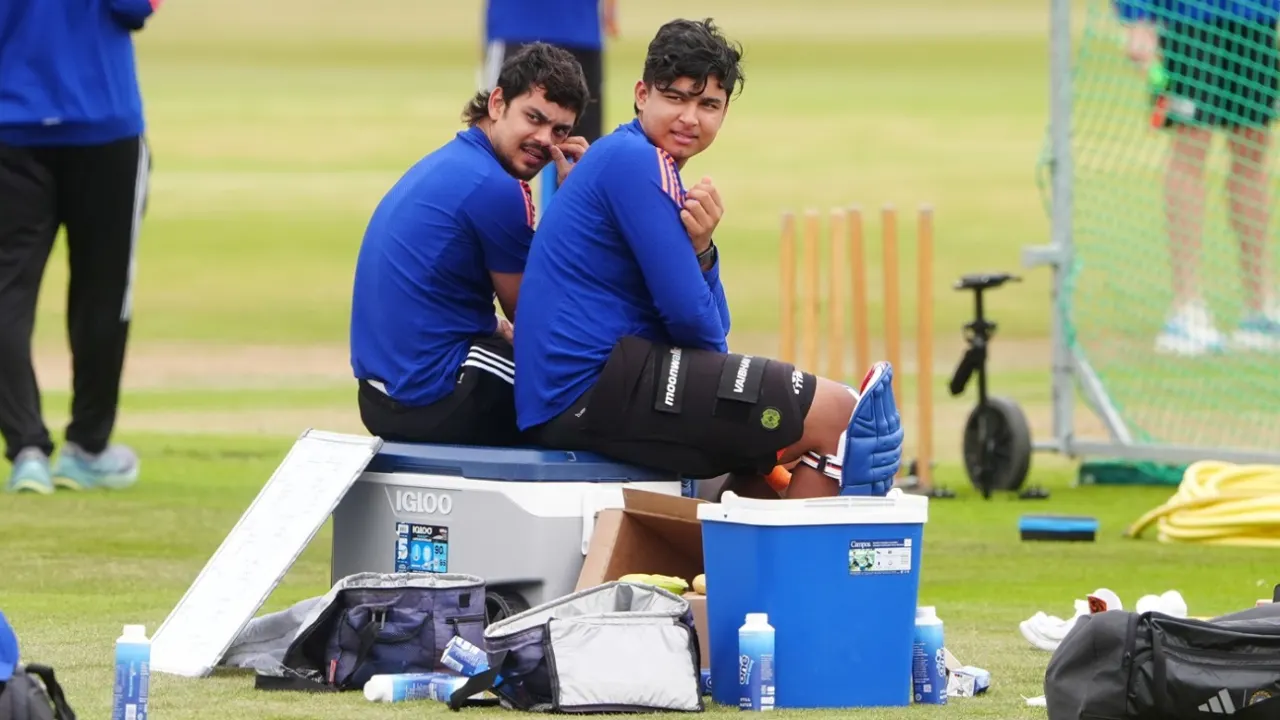
After setting the IPL and international stage on fire, Vaibhav Sooryavanshi is ready for the toughest examination of his young career as he takes on the Duleep Trophy with East Zone.
Indian cricket has always celebrated prodigies, but very few have managed to create the kind of excitement that Vaibhav Sooryavanshi has generated over the past year. The teenage batting sensation captivated fans with his fearless stroke play in the Indian Premier League before making an impressive transition to international cricket. Now, the spotlight shifts to a completely different challenge—red-ball cricket.
In a significant vote of confidence, the East Zone selectors have appointed Sooryavanshi as vice-captain for the 2026-27 Duleep Trophy, making him one of the youngest leadership figures in the tournament’s history. The appointment signals that Indian cricket’s decision-makers view him as more than just an explosive white-ball batter. They see a future leader capable of thriving across all formats.
A New Chapter Begins
The Duleep Trophy has long been regarded as one of India’s premier domestic competitions. Featuring the country’s finest performers from different zones, the tournament often serves as the final proving ground before national selection.
For Vaibhav Sooryavanshi, this tournament represents far more than another domestic assignment. It is an opportunity to answer the one question critics continue to ask: Can he succeed in red-ball cricket?
His first-class record remains modest. Across eight first-class matches, Sooryavanshi has accumulated 207 runs from 12 innings at an average of 17.25, with a highest score of 93. While those numbers hardly reflect the hype surrounding him, they also come from a limited sample size during the early stages of his career.
The Duleep Trophy provides the perfect platform to rewrite that narrative.
Leadership Responsibility at a Young Age
Perhaps the biggest surprise in East Zone’s announcement was Sooryavanshi’s elevation to the role of vice-captain.
Leadership responsibilities are rarely handed to teenagers unless selectors possess immense faith in their temperament. Sharing the dressing room with experienced professionals while also assisting captain Ishan Kishan will accelerate Sooryavanshi’s cricketing education.
The role will expose him to tactical discussions, field placements, bowling changes, and match management—skills that cannot be learned through batting alone.
For a player widely regarded as one of India’s brightest batting prospects, these experiences could prove invaluable in shaping his long-term career.
Opening Alongside a Domestic Giant
One of the most exciting aspects of East Zone’s squad is the likely opening partnership between Vaibhav Sooryavanshi and Abhimanyu Easwaran.
Few domestic batters possess Easwaran’s experience. Having featured in 113 first-class matches, he remains one of India’s most consistent red-ball performers despite enduring frustrating near-misses at the international level.
For Sooryavanshi, opening alongside Easwaran presents an ideal learning opportunity.
While the youngster thrives on aggressive stroke-making, Easwaran represents patience, discipline, and technical excellence. Watching the Bengal veteran negotiate challenging conditions could help Sooryavanshi develop the temperament necessary for success in longer formats.
Their contrasting styles may also create a balanced opening combination capable of troubling opposition attacks.
An Experienced Core Around the Youngster
East Zone’s squad blends youthful exuberance with seasoned campaigners.
Captain Ishan Kishan brings international experience behind the stumps and aggressive batting at the top of the order. Veteran fast bowler Mohammed Shami remains the attack’s leader after an outstanding domestic season that saw him claim 37 wickets in just seven Ranji Trophy matches.
Joining him are fellow Bengal pacers Mukesh Kumar and Suraj Sindhu Jaiswal, giving East Zone one of the strongest pace units in the competition.
The squad also includes versatile all-rounders Shahbaz Ahmed and Anukul Roy, both capable of contributing with bat and ball.
Young wicketkeeper Kumar Kushagra, top-order batter Virat Singh, promising opener Shikhar Mohan, Odisha’s Subranshu Senapati, Tripura all-rounder Abhijit Sarkar, and Bengal batter Denish Das complete a balanced squad with depth across departments.
Also Read-Saransh Jain Earns Maiden India Test Call-Up
Missing Stars Open New Doors
East Zone will be without two major names.
Riyan Parag continues his rehabilitation after undergoing right shoulder surgery following IPL 2026, while Akash Deep remains unavailable as he recovers from back surgery.
Although their absence weakens the squad on paper, it simultaneously creates greater opportunities for emerging talents.
With Parag unavailable, the middle order will rely on players like Virat Singh and Shahbaz Ahmed to provide stability, while Sooryavanshi’s performances at the top become even more significant.
Shami’s Presence Could Be Priceless
Another major advantage for Sooryavanshi is sharing the dressing room with Mohammed Shami.
Few fast bowlers understand red-ball cricket as well as the Indian veteran. Training against Shami in the nets will expose Sooryavanshi to world-class seam movement, accuracy, and tactical bowling.
Young batters often improve rapidly after facing elite bowlers regularly in practice.
The mentorship of experienced professionals like Shami, Easwaran, and Kishan could accelerate Sooryavanshi’s development far beyond what statistics alone can measure.
Why the Duleep Trophy Still Matters
While the IPL dominates headlines, tournaments like the Duleep Trophy remain critical to India’s cricketing ecosystem.
National selectors continue to monitor performances closely, particularly when identifying future Test players. Consistent displays in the competition have historically opened the door to India A tours and eventually the senior Test side.
For Sooryavanshi, this tournament could become the bridge between being recognized as a T20 sensation and being respected as a complete cricketer.