

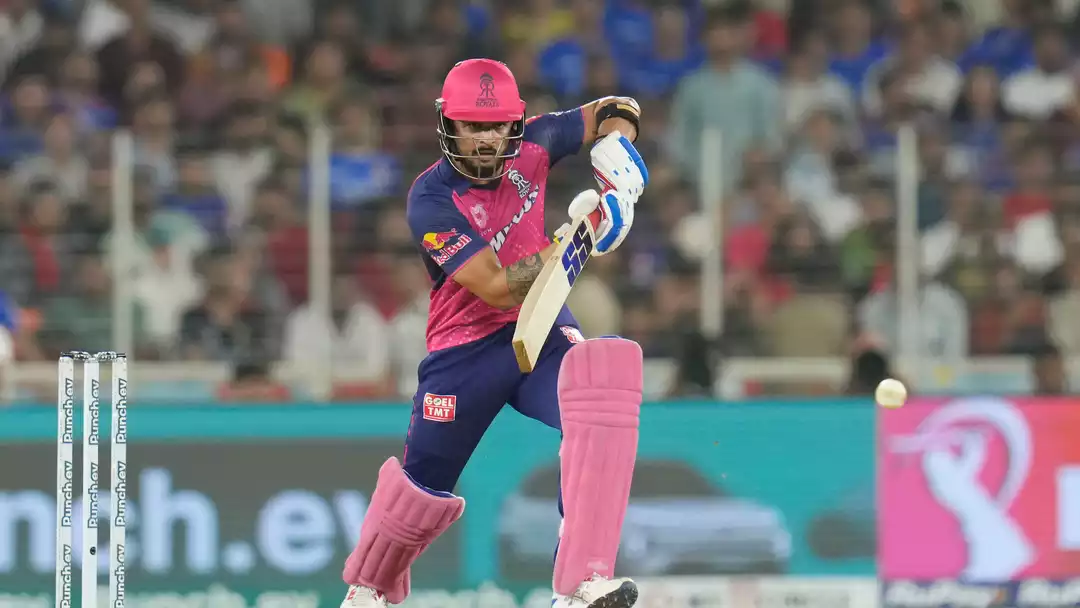
The recent controversy involving Riyan Parag has placed the Board of Control for Cricket in India (BCCI) and the Indian Premier League in unfamiliar territory, raising questions about regulatory gaps and disciplinary frameworks within Indian cricket. The incident, which shows the Rajasthan Royals captain allegedly using an e-cigarette inside the dressing room during a match, has sparked debate over whether existing rules adequately address such conduct.
A Regulatory Grey Area
What makes this case particularly complex is the absence of a clearly defined rule that directly prohibits smoking or vaping inside team dressing rooms. While the IPL operates under strict codes of conduct and anti-corruption guidelines, none explicitly mention the use of e-cigarettes in such environments.
This creates a legal and administrative grey zone for the BCCI. Unlike offences such as on-field misconduct, corruption breaches, or code violations involving dissent, this situation does not neatly fall into any predefined category.
The only potentially relevant framework is the Players and Match Officials Area (PMOA) guidelines, which primarily deal with security protocols, anti-corruption measures, and restricted access zones. However, applying these rules to a vaping incident would require interpretational flexibility, something that governing bodies typically approach with caution.
Possible Application of PMOA Guidelines
Clause 6.1.7 of the BCCI’s minimum standards for players and match officials could theoretically be referenced. This clause allows authorized officials to conduct searches of individuals and their belongings within the PMOA to ensure compliance with regulations.
While this provision is largely aimed at preventing corruption-related activities—such as the use of unauthorized communication devices—it could be stretched to cover prohibited items, including e-cigarettes. However, such an interpretation would be unprecedented and may face scrutiny if enforced.
If the BCCI chooses to proceed under PMOA provisions, it would effectively broaden the scope of these guidelines beyond their original intent. That, in turn, could set a significant precedent for future disciplinary actions.
Legal Context in India
The issue is further complicated by India’s stance on e-cigarettes. The country has banned the production, manufacture, import, export, sale, and distribution of e-cigarettes under national law. However, the legal framework does not clearly prohibit their use in indoor settings.
This creates a paradox: while possession and use may not be explicitly illegal in private or indoor environments, the broader regulatory intent is clearly discouraging their presence. For a high-profile sporting league like the IPL, which operates under intense public scrutiny, this distinction becomes critical.
Potential Disciplinary Outcomes
The BCCI has yet to issue any official notice to either Parag or his franchise, Rajasthan Royals. However, if the board decides to act, it may rely on general disciplinary provisions or interpret the incident as a breach of professional conduct.
Under PMOA-related sanctions, penalties for violations can escalate progressively:
- A first offence may attract a fine of INR 1 lakh
- A second offence could result in a higher financial penalty
- Repeated violations may lead to suspension, including match bans
If charges are brought, Parag and the Royals are likely to argue for leniency, positioning the incident as a first-time offence in an area where rules are not explicitly defined.
ALSO READ-Nahid Rana Cleared for PSL Final
Image and Professional Standards
Beyond legalities, the incident raises questions about professionalism and the image of players representing high-profile franchises. The IPL is not just a sporting event but a global entertainment product, watched by millions across the world.
Actions within dressing rooms, even if technically private, can quickly become public in the digital age. This places an added responsibility on players to maintain standards that align with the league’s brand and values.
For a young captain like Parag, who is still establishing his leadership credentials, such incidents can have reputational implications. Leadership roles in franchise cricket demand not just performance but also adherence to behavioral expectations.
A Defining Moment for Policy
The BCCI’s response to this situation could have long-term implications. If the board chooses to penalize the act, it may need to formally introduce or clarify rules regarding smoking, vaping, and similar conduct within restricted areas.
Conversely, if no action is taken, it could signal that such behavior falls outside the current regulatory scope—potentially opening the door for similar incidents in the future.
In either case, the incident highlights the need for more comprehensive guidelines that address off-field conduct in evolving contexts. Modern cricket environments, with their mix of strict regulation and informal spaces like dressing rooms, require clearly defined boundaries.
What Happens Next?
As of now, there has been no official comment from the BCCI or IPL authorities. The silence suggests that the matter is still under internal consideration, with stakeholders likely weighing legal, ethical, and reputational factors before making a decision.
For Parag and the Rajasthan Royals, the focus will remain on on-field performance, but the off-field scrutiny is unlikely to fade quickly. The coming days will be crucial in determining whether this remains a one-off controversy or becomes a catalyst for regulatory reform in Indian cricket.
Ultimately, this episode underscores a broader reality: as the game evolves, so must its governance. The BCCI now faces the challenge of addressing a situation that sits at the intersection of legality, professionalism, and precedent—without a clear rulebook to rely on.