

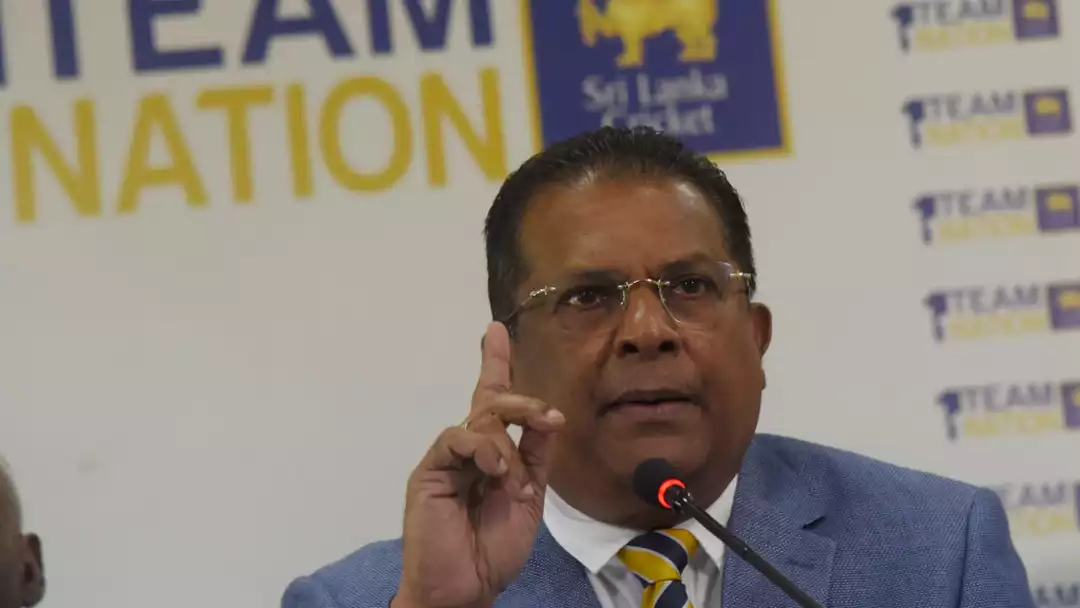
A significant administrative shift is unfolding in Sri Lanka Cricket, with long-serving president Shammi Silva set to step down, marking the end of an influential tenure that began in 2019. The transition signals a new phase for Sri Lankan cricket governance, albeit one surrounded by legal, political, and international complexities.
Interim Leadership to Take Charge
Government nominee Eran Wickramaratne is expected to assume control in an interim capacity. His appointment reflects direct government involvement, reportedly overseen by Sri Lankan President Anura Kumara Dissanayake.
An executive committee meeting has been scheduled to formalize the transition. While some members within the board have reportedly expressed interest in continuing their term, sources suggest there is limited room for resistance given the political backing behind the move.
Legal and ICC Implications
The development raises important governance questions. Under Sri Lanka’s Sports Law of 1973, the Sports Minister has the authority to dissolve sports bodies. However, such intervention can conflict with the regulations of the International Cricket Council, which discourages government interference in cricket administration.
This creates a delicate situation. While reports indicate that the ICC has been informed and is aware of the transition, its official stance will be closely watched. Historically, similar interventions have triggered sanctions, including suspensions.
A notable precedent occurred in 2023, when SLC was suspended following government interference after Sri Lanka’s poor performance at the ODI World Cup. That decision led to the relocation of the Under-19 World Cup from Sri Lanka to South Africa.
Parallel Developments in Bangladesh
Interestingly, a comparable situation is unfolding within the Bangladesh Cricket Board, where the previous administration led by Aminul Islam Bulbul was replaced by an interim body headed by Tamim Iqbal.
Despite these parallel governance disruptions, there are currently no strong indications of immediate ICC intervention in either case. The global body appears to be monitoring developments while allowing internal processes to play out.
Performance and Allegations Behind the Move
Local reports suggest that declining performances of the national team may have influenced the government’s decision. Sri Lanka, led by Dasun Shanaka, failed to qualify for the Super 8 stage of the recent T20 World Cup—a disappointing outcome for a team with a rich cricketing history.
Additionally, there have been allegations of corruption within SLC. However, insiders point out that no formal or substantiated charges have been publicly established. This lack of concrete evidence adds another layer of complexity to the justification for the administrative overhaul.
Financial and Hosting Context
Ironically, Sri Lanka Cricket has seen some off-field successes during Silva’s tenure. The board successfully co-hosted a major ICC tournament alongside the Board of Control for Cricket in India, boosting its financial position.
Moreover, Sri Lanka is scheduled to host another ICC event in 2029, indicating continued trust in its organizational capabilities at the international level.
ALSO READ-Dhoni Return Delayed After Fresh Calf Setback
A Familiar Cycle of Change
This is not the first time Shammi Silva has been removed from office. In 2023, he was similarly ousted by then Sports Minister Roshan Ranasinghe before later returning to power by winning elections in March 2025.
Despite having a year remaining in his current term, Silva’s tenure now appears to be ending prematurely once again—highlighting the cyclical instability in Sri Lanka’s cricket administration.
What Happens Next?
The immediate focus will be on how the interim administration operates and whether it can ensure a smooth transition to a newly elected body. Reports suggest there is a commitment to holding fresh elections soon, which could help align governance with ICC expectations.
The ICC will likely insist on a clear roadmap toward democratic elections within a defined timeframe to avoid any punitive action.
Sri Lanka Cricket finds itself at a critical crossroads. While administrative change may offer an opportunity for reform and renewed direction, the manner in which it is executed carries significant risks—particularly in relation to ICC compliance.
Balancing government authority with international governance standards will be key. If handled carefully, this transition could stabilize Sri Lankan cricket. If not, it may trigger further disruptions, both administratively and on the global stage.
As events unfold, the cricketing world will closely monitor whether this change leads to meaningful reform or adds another chapter to Sri Lanka’s ongoing governance challenges.