

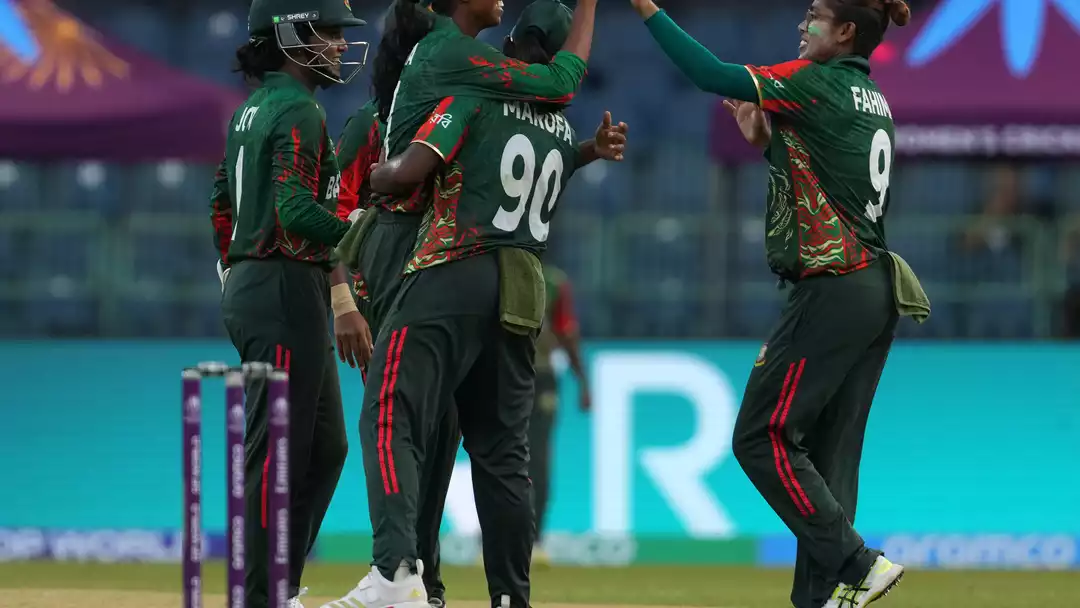
Former Bangladesh captain Rumana Ahmed has backed the idea of including women cricketers in leadership roles within the Bangladesh Cricket Board (BCB), calling it a “positive step” that could reshape governance in the country’s cricket structure.
Her remarks come at a time when discussions are quietly gaining traction among current and former women players about securing representation at the board level—specifically in the form of a director’s position.
A Push for Inclusive Governance
The proposal, though still informal, reflects a broader demand for inclusivity in cricket administration. Traditionally, governance structures in many cricket boards—including the BCB—have been dominated by representatives from men’s cricket, clubs, and regional associations.
Rumana’s stance highlights a growing recognition that women’s cricket requires a voice at the decision-making table. According to her, having a former or current woman cricketer in the boardroom would ensure that policies and decisions better reflect the realities and needs of the women’s game.
She emphasized that such representation would bring subject-matter expertise, particularly in areas like player development, scheduling, infrastructure, and grassroots investment.
Administrative Shake-Up
This conversation is unfolding amid significant administrative changes within the BCB. The National Sports Council recently dissolved the elected board led by Aminul Islam Bulbul, citing allegations of misuse of power.
In its place, an interim 11-member ad-hoc committee has been appointed under the leadership of Tamim Iqbal. This committee has been tasked with overseeing daily operations and conducting fresh elections within a 90-day window, expected around mid-June.
The transitional phase presents a rare opportunity to reconsider governance structures—including the possibility of integrating women cricketers into leadership roles.
Structural Realities and Challenges
Currently, the BCB’s structure allows 25 directors to be elected from various categories: clubs, divisions, districts, and nominated positions. These directors then elect the board president.
Introducing a woman cricketer into this framework is not straightforward. It may require constitutional amendments or adjustments to existing categories—both of which involve legal and procedural complexities.
The ad-hoc committee is reportedly awaiting guidance from legal experts on how the upcoming election will be conducted. This legal clarity will be crucial in determining whether structural reforms, such as gender-inclusive representation, can be implemented in the immediate term.
Voices from Within Women’s Cricket
Rumana acknowledged that discussions among women cricketers have begun, but also pointed out a lack of clarity on how to formally push the proposal forward. She noted that while there is interest, there is also hesitation due to limited access to decision-making channels.
Interestingly, she suggested that an invitation or initiative from the board itself might be more effective than players lobbying for inclusion. This reflects a broader cultural and institutional challenge where advocacy alone may not translate into structural change without top-down support.
Learning from the Men’s Game
Rumana also drew a parallel with the men’s side, where former players frequently transition into administrative or governance roles. Figures with playing experience often contribute to policy decisions, talent identification, and strategic planning.
Extending a similar pathway to women cricketers would not only ensure parity but also strengthen the overall governance framework by incorporating diverse perspectives.
ALSO READ-Rohit Set for Comeback as MI Seek Turnaround
Potential Impact on Women’s Cricket
If implemented, the inclusion of a woman cricketer as a BCB director would be a historic move. It could lead to more targeted investments in women’s cricket, improved facilities, and better career pathways for aspiring players.
Moreover, it would send a strong signal about the board’s commitment to gender equality and progressive governance—an important factor as global cricket continues to evolve.
A Window of Opportunity
The current transitional phase in BCB governance could serve as a catalyst for long-overdue reforms. With elections approaching and structural decisions under review, stakeholders have a unique chance to redefine how the board operates.
Rumana Ahmed’s comments have brought an important issue into focus at a critical time for Bangladesh cricket. While the path to inclusion may be complex, the conversation itself marks a significant step forward.
Whether this momentum translates into tangible change remains to be seen. But if the BCB does move toward integrating women cricketers into its leadership, it could set a powerful precedent—not just for Bangladesh, but for cricket boards around the world.