

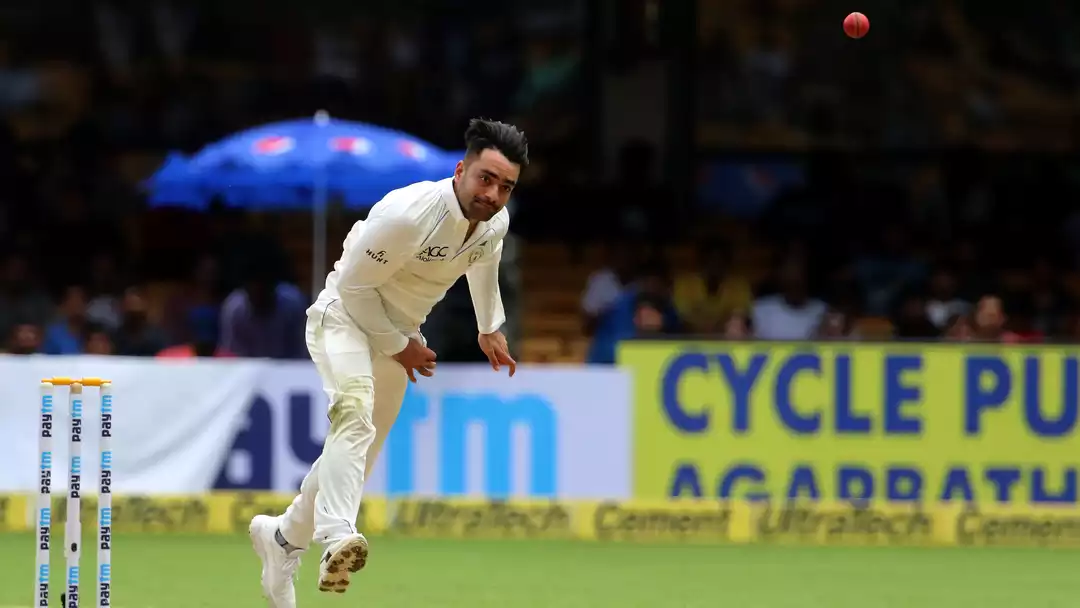
Afghanistan cricket may soon see a major shift in how it manages its biggest star, as head coach Richard Pybus has made it clear that the team will not risk Rashid Khan’s long-term future by pushing him into red-ball cricket.
The statement comes amid growing concerns over Rashid’s recurring back issues, which have already begun influencing his workload management across formats. With a crucial international calendar ahead, including a one-off Test against India national cricket team in June, Afghanistan are treading cautiously.
Rashid Khan’s Growing Injury Concerns
Rashid Khan, widely regarded as one of the best T20 bowlers in the world, has been a cornerstone of Afghanistan’s rise in international cricket. However, his demanding schedule across formats and global T20 leagues has taken a toll on his body—particularly his back.
The leg-spinner recently revealed that medical advice has strongly cautioned him against continuing in red-ball cricket if he wishes to extend his career.
According to Rashid, doctors warned that playing longer formats, which require extended spells and heavy workloads, could significantly shorten his playing career. Despite these warnings, he pushed through and featured in Afghanistan’s Test against Zimbabwe, where he bowled an exhausting workload across two innings.
That experience appears to have been a turning point.
Pybus Emphasizes Player Welfare
Richard Pybus has now reinforced the team management’s stance, emphasizing that player welfare must take precedence over immediate results. His comments underline a broader shift in modern cricket, where workload management and injury prevention are becoming central to team strategies.
Afghanistan’s coaching staff is particularly mindful of Rashid’s importance—not just as a bowler, but as a leader and global ambassador for Afghan cricket. Losing him prematurely due to injury would be a significant setback for the team.
Pybus’s statement effectively signals that Afghanistan will avoid selecting Rashid for Test matches unless his fitness and long-term sustainability can be assured.
Doubt Over India Test Participation
One of the immediate implications of this approach is Rashid’s uncertain availability for the upcoming Test against India. The one-off match, scheduled for June, is a significant fixture for Afghanistan, offering them a chance to compete against one of the strongest teams in world cricket.
However, given the current circumstances, Rashid’s participation remains in serious doubt. The team management is likely to assess his condition closer to the date before making a final decision.
If he does sit out, it would be a major blow to Afghanistan’s chances, as Rashid has been their most effective bowler across formats.
The Workload Challenge in Red-Ball Cricket
Test cricket demands a completely different level of physical endurance compared to limited-overs formats. Bowlers are required to deliver long spells, often across multiple days, which can be particularly taxing for spinners with high-intensity actions like Rashid.
His recent experience—bowling over 60 overs in a single Test—highlights the strain that red-ball cricket places on his body. For a player already dealing with back issues, such workloads can be unsustainable.
This is in stark contrast to T20 cricket, where spells are shorter and more manageable, allowing players like Rashid to perform at their peak without excessive physical stress.
Balancing Formats and Career Longevity
Rashid Khan’s situation reflects a broader trend in modern cricket, where players are increasingly prioritizing formats that allow them to maximize both performance and career longevity.
With lucrative T20 leagues and packed international schedules, managing workload has become critical. For Afghanistan, this means making strategic decisions about when and where to deploy their star player.
By potentially limiting Rashid’s involvement in Test cricket, Afghanistan can ensure his availability for white-ball formats, where he has consistently delivered match-winning performances.
ALSO READ- Pathirana Cleared to Join KKR, Set for CSK Clash
Impact on Afghanistan’s Test Aspirations
While prioritizing Rashid’s health is a logical decision, it does pose challenges for Afghanistan’s ambitions in Test cricket. As a relatively new entrant to the format, the team relies heavily on experienced players to compete at the highest level.
Rashid’s absence would leave a significant gap in their bowling attack, forcing the team to explore alternative options and develop new talent.
However, this could also be seen as an opportunity for emerging players to step up and gain valuable experience in the longest format of the game.
A Pragmatic Approach
Ultimately, Afghanistan’s decision reflects a pragmatic approach to team management. Rather than risking a key player’s career for short-term gains, they are focusing on long-term sustainability.
This approach aligns with global best practices in sports management, where player health and performance longevity are given top priority.
Rashid Khan’s potential move away from red-ball cricket marks a significant moment for Afghanistan cricket. While his absence from Tests would be felt deeply, the decision to prioritize his long-term fitness is both sensible and necessary.
As the cricketing world evolves, such decisions are becoming increasingly common, highlighting the need for careful workload management in an era of packed schedules.